Showing posts with label Boston Globe. Show all posts

Wednesday, October 6, 2010

Lamb & Figs


Roast lamb with figs, and then roll out the flatbread
By Karoline Boehm Goodnick, Globe Correspondent | October 6, 2010

Once a common roast for midday Sunday dinner, leg of lamb has lost its place of prominence. One reason is that the joint is known to be hard to carve. But now legs come boned and rolled and take about an hour to roast. With shared Mediterranean origins, lamb and figs are a natural match. Add couscous, a North African staple, and you have an appealing plate. Rub the meat with a smoky, sweet combination of paprika and rosemary. Halfway through roasting, surround the lamb with chopped fresh mission figs so their juices meld with the drippings. While the meat rests after roasting, make a quick pan sauce that will serve you again on flatbreads.

Whether you call it pizza or flatbread, this stylish pie has been embraced by chefs everywhere, and is a terrific way of repurposing leftovers. Buy pizza dough, divide it into pieces, then flatten them (don’t worry if you’re not good at this; misshapen rounds add rustic elegance). Top each with fig sauce, arugula leaves, lamb, and goat cheese. Bake them near the bottom of the oven until they’re firm and golden, then sprinkle with balsamic vinegar and olive oil. New England practicality meets modern flare.

Roast leg of lamb with figs

Serves 4, with leftovers

1 boned rolled leg of lamb (3 1/2 pounds)
3 cloves garlic, halved
Salt and pepper
2 tablespoons chopped fresh rosemary
1 tablespoon paprika
2 tablespoons olive oil
18 fresh black mission figs, stemmed and chopped
1 cup red wine
2 tablespoons balsamic vinegar
2 tablespoons honey

1. Set the oven at 450 degrees. With a small knife, cut 6 small slits in the lamb, and place 1/2 clove garlic in each slit. Sprinkle lamb with salt and pepper.

2. In a small bowl, mix together rosemary, paprika, and olive oil. Rub lamb with the rosemary mixture. Set it in a large cast iron skillet or heavy roasting pan (not ceramic).

3. Roast the lamb for 20 minutes. Lower the oven temperature to 325 degrees. Continue roasting for 15 minutes. Remove the pan from oven and set the figs around the edges of the pan. Roast for 20 minutes or until a meat thermometer inserted in the center of the meat registers 125 to 130 degrees for rare lamb. (Total roasting time is 55 minutes.) For medium to well-done meat, continue roasting for 5 to 10 minutes or until the temperature reaches 145 to 160 degrees.

4. Transfer the roast to a metal rack set over a plate. Let it rest for 5 minutes (the temperature will continue to rise a few degrees).

5. Pour off the fat from the pan, keeping the juices. Place the pan on a burner over high heat. Add the wine and vinegar. Bring to a boil, stirring constantly, and let it bubble for 5 minutes. Add honey, salt, and pepper. Set aside 1 1/2 cups sauce with some figs in it for the flatbreads.

6. Discard twine from lamb. Carve the lamb on a slight angle into thick pieces. Set aside 1/4 of the lamb for the flatbreads.

7. Divide the remaining lamb and couscous among 4 plates. Ladle fig sauce over the lamb.


Fig and lamb flatbreads

Serves 4

Olive oil (for sprinkling)
2 pounds commercial pizza dough
Flour (for sprinkling)
1 1/2 cups fig sauce from lamb
2 cups fresh arugula, stemmed
2 cups chopped roast lamb
8 ounces fresh goat cheese
Salt and pepper, to taste
Balsamic vinegar (for sprinkling)

1. Set the oven at 500 degrees. Position a rack at the lowest part of the oven. Lightly oil 2 large rimmed baking sheets.

2. Punch down the dough. Divide it into 8 equal pieces. Dust each lightly with flour, and cover 7 of them with a clean towel. Using a rolling pin, roll 1 ball firmly and evenly, flattening it into a 6-inch disk, dusting with flour when the dough becomes sticky. Slip it under the towel and shape the remaining rounds in the same way. Divide the rounds between the baking sheets.

3. With the back of a spoon, spread about 3 tablespoons of fig sauce on each round, then add 1/4 cup arugula, 1/4 cup chopped lamb, 2 tablespoons goat cheese, salt, and pepper.

4. Bake the pizzas for 5 minutes or until the crust is firm and golden. With a wide metal spatula, transfer the pizzas to a large platter. Sprinkle with balsamic vinegar and pepper. Brush crust with olive oil.

Wednesday, September 29, 2010

Whole Wheat Pancakes with Apple Compote


Whole-wheat pancakes with apple compote
September 29, 2010
Boston Globe

Serves 4

Whole-wheat pancakes, made with beaten egg whites, are hearty and nutty, a good match for an apple compote with walnuts, raisins, maple syrup, and warm spices. Double the compote recipe to keep on hand for other breakfasts or to set beside pork chops at supper.

COMPOTE

4 baking apples (see Page 19), peeled, seeded, and chopped
1/4 cup chopped walnuts
1/4 cup golden raisins
1 tablespoon butter
1/4 cup maple syrup
1/4 cup water
Juice of 1 lemon
Pinch of ground cinnamon
Pinch of ground nutmeg
Pinch of salt

1. In a heavy saucepan over high heat, combine apples, walnuts, raisins, butter, maple syrup, water, lemon, cinnamon, nutmeg, and salt.

2. Bring liquid to a boil, lower the heat, and cook over medium-high heat, stirring often, for 10 minutes or until apples soften.

PANCAKES

4 eggs, separated
1 1/2 cups milk
1/4 cup sour cream
1/4 cup sugar
2 tablespoons canola oil
1/2 teaspoon salt
2 teaspoons baking powder
1/2 teaspoon baking soda
1 1/2 cups whole-wheat flour
1 1/2 cups all-purpose flour
Canola oil (for the pan)
1/2 cup heavy cream, softly whipped (optional)

1. In a bowl, whisk the egg whites until they hold stiff peaks; set aside.

2. In another large bowl, stir together yolks, milk, sour cream, sugar, canola oil, and salt. With a rubber spatula, fold in the baking powder, baking soda, and whole-wheat and all-purpose flours. Fold in the whites.

3. Heat a large nonstick skillet over medium heat. Add a few drops of canola oil and swirl it around in the pan.

4. Ladle the batter by the 1/4 cupfuls, adding about 4 to the pan. Cook for 2 to 3 minutes or until bubbles form on the tops of the pancakes. Turn and cook 2 to 3 minutes more or until golden on the undersides. Wipe pan with oil between batches.

5. Serve pancakes with apple compote and whipped cream, if you like.

Apple Clafoutis


Apple clafoutis
September 29, 2010
Boston Globe

Serves 6

Traditionally made in the Limousin region of France with sour cherries, this rustic dessert offers a platform to showcase seasonal fruit. The mixture is similar to a crepe or pancake batter. Let it rest and it will develop flavor. Saute apples in butter and sugar, then combine the fruit and batter in a baking dish. As it cooks, it turns into a souffle with a golden crust, which falls as it cools (it’s supposed to) and tastes almost creamy.

BATTER

2 eggs plus 2 extra yolks
1/2 cup sugar
Pinch of salt
2 teaspoons vanilla extract
1/2 cup flour
3/4 cup milk
1/2 cup heavy cream

1. In a blender, work the eggs, extra yolks, sugar, salt, and vanilla for 30 seconds. Add the flour and blend until smooth.

2. With the machine running, pour in milk and cream. When the mixture is smooth, set aside for 30 minutes.

APPLES

2 tablespoons butter
4 baking apples, peeled, seeded, and chopped
2 tablespoons granulated sugar
Salt, to taste
2 tablespoons brandy
Butter (for the dish)
1 teaspoon granulated sugar mixed with 1/2 teaspoon ground cinnamon
Confectioners’ sugar (for sprinkling)

1. In a large skillet over medium-high heat, heat the butter. Add the apples, 2 tablespoons granulated sugar, and salt. Cook, stirring often, for 5 minutes, or until apples are tender. Remove pan from heat, and add brandy. Return pan to heat, and cook for 2 minutes.

2. Transfer the apples to a plate; leave to cool.

3. Set the oven at 350 degrees. Butter a deep 9-inch baking dish.

4. Lay the apples in the dish. Cover with batter. Sprinkle with the cinnamon-sugar mixture.

5. Bake for 35 to 40 minutes, or until the mixture is puffed and golden, and a knife inserted into the center comes out clean.

6. Cool on a wire rack. Sprinkle with confectioners’ sugar.

Honey Caramel Apple Dip


Honey-caramel apple dip
Boston Globe
September 29, 2010

Serves 6

You may have noticed individual packs of caramel sauce lining produce shelves for dipping apples. It’s easy enough to make your own. You need a candy thermometer and a large saucepan (the steps are simple, but working with sugar is precise). Use caution with children around as caramel reaches extremely hot temperatures and crawls high up the sides of the pot. For added fun, set up a dipping bar with chocolate chips, chopped nuts, and red hot cinnamon candies. Skip the stick.

1 1/2 cups plus 2 tablespoons heavy cream
1/2 teaspoon salt
1 cup honey
6 apples, cored and cut into wedges

1. In a large, heavy bottom saucepan, heat 1 1/2 cups of the cream and salt over high heat just until small bubbles begin to form on the surface (just before a simmer).

2. Stir in the honey and bring to a boil. Let the mixture bubble steadily, stirring often with a wooden spoon, for 10 minutes or until a candy thermometer registers 240 degrees. Carefully remove saucepan from the heat.

3. In a small saucepan, heat the remaining 2 tablespoons cream. Stir warm cream into hot caramel.

4. Transfer caramel to a heatproof bowl. Set aside to cool completely. Serve at room temperature with apple wedges.

Friday, September 17, 2010

Modern 3 Bean Salad


Modern three-bean salad
From The Boston Globe
September 15, 2010

Serves 4

Once the result of several cans of beans tossed with sugar and vinegar, three-bean salad has been updated. For ease, keep at least one can in the mix (kidney beans) and toss in your favorite variety of frozen beans (such as limas). Blanched green beans add freshness, limas and kidneys protein, bell pepper and red onion some crunch. Instead of cilantro, substitute dill or parsley, if you like. Add chopped smoked salmon for a more substantial dish, and move the salad from the side table to the main course.

2 tablespoons olive oil
1 teaspoon ground cumin
1 can (15 ounces) red kidney beans, drained and rinsed
2 tablespoons cider vinegar
1 package (10 ounces) frozen lima beans, rinsed with cold water
1 green bell pepper, cored and chopped
1 small red onion, finely chopped
1 clove garlic, finely chopped
Salt and pepper, to taste
1/2 pound green beans, trimmed and cut into 2-inch pieces
2 tablespoons chopped fresh cilantro

1. In a skillet, heat the olive oil. Add the ground cumin and red kidney beans. Stir well for 1 minute. When they are hot, stir in vinegar.

2. Stir in limas beans. Cook for 1 minute more.

3. In a large bowl, combine bell pepper, onion, garlic, salt, and pepper. Add kidney bean mixture. Toss gently and set aside for 30 minutes or until cool.

4. Bring a saucepan of salted water to a boil. Add green beans and cook for 3 minutes, or until tender but still have some bite. Drain and rinse with cold water until the beans are no longer hot. Pat them dry with paper towels.

5. Add the green beans and cilantro to the kidney bean mixture. Toss well. Taste for seasoning, and add more salt and pepper, if you like.

Karoline Boehm Goodnick

Friday, September 3, 2010

Mexican Corn on the Cob


Mexican corn on the cob
By Karoline Boehm Goodnick, Globe Correspondent | August 18, 2010

Serves 6

Also known as elote, Mexican-style corn on the cob can be boiled first or grilled over hot coals until the kernels are charred and toasty. It’s a dish that began as street food and is now served in good restaurants. The white cheese cotija is at many specialty markets, but you can substitute a dry, crumbly cheese such as feta. Sprinkle with cayenne pepper for a kick of spice, guajillo for smoky notes, or paprika for sweet earthiness. Finish with a spritz of lime to make it pop.

Salt, to taste
6 ears of corn, shucked
3 tablespoons mayonnaise
1 cup crumbled cotija cheese
2 teaspoons cayenne pepper, guajillo, or paprika
2 limes, quartered
1. In a large shallow pot, bring several inches of salted water to a boil. Add the corn, cover, and cook for 3 minutes, turning once.

2. Remove the corn from the water, and pat dry with paper towels.

3. Spread 1/2 tablespoon mayonnaise on each ear. Sprinkle corn with crumbled cheese, pressing lightly so it sticks. Sprinkle with salt and cayenne pepper, guajillo, or paprika. Serve with lime.

Barbeclette


Have a meltdown
By Karoline Boehm Goodnick, Globe Correspondent | September 1, 2010

Raclette is both a European cow’s milk cheese and a popular Swiss dish which typically consists of melted cheese scraped onto a heaping pile of boiled potatoes, pickled onions, and gherkins. Today, there are a variety of instruments used to re-create this fondue-like appetizer at home, none simpler than the Barbeclette ($12.39). Made by Boska Holland, in the Netherlands, the nonstick tray has a heatproof handle for use on outdoor grills. A campfire setting was once an essential component for raclette, dinner for Alpine cattle herders. But the tool has other uses. Melt mozzarella as a topping for vegetable skewers; combine provolone, tomatoes, and oregano in the pan for a variation of provoleta; stick by the traditional Swiss or appenzeller, melted and poured over cured meats and grilled potatoes; or top your favorite burger. Whatever way you slice it, there are few things greater than gooey, melted cheese. Available at Boston Cheese Cellar, 18 Birch St., Roslindale, 617-325-2500; Idylwilde Farms, 366 Central St., Acton, 978-263-5943.

Wednesday, August 11, 2010

Sausage & Peppers To Dirty Rice


Italian sausages and peppers
August 4, 2010

Italian sausage and bell peppers make a hearty pair, no matter how you do them — grilled and lightly charred, braised in beer, slow cooked, served on a bun, or tossed with pasta.

Another great way to present the satisfying duo is to cook them in a skillet and spoon them over soft polenta. Brown the sausages and remove them from the pan, then cook the onions and peppers in the meaty bits. Simmer them together in beer. Stir a potful of golden polenta while they cook. Slowly stream polenta flour into boiling water and keep stirring until it thickens. Season with butter and cheese.

The following day, leftover sausages, peppers, and onions become dirty rice, a Cajun specialty in which ground meat muddies (in a good way) white grains. The mixture is cooked pilaf style, typically with chicken livers. Cooking the livers separately guarantees a crispy exterior and pleasant flavor. Chop them finely and stir them into the cooked rice with a classic New Orleans garnish of scallions and parsley. Serve with a splash of Louisiana hot sauce. Beads optional.

Serves 4, with leftovers

SAUSAGES

1 tablespoon vegetable oil
10 Italian sausage links (mixture of hot and sweet), pricked well all over
5 bell peppers (red, yellow, green), cored, seeded, and thinly sliced
2 large red onions, thinly sliced
1 bay leaf
1 sprig fresh oregano
12 ounces lager beer
1/4 cup red wine vinegar
Salt and pepper, to taste

1. In a large flameproof casserole with a tight fitting lid, heat the oil over high heat. Add sausages and cook, turning several times, for 5 to 7 minutes or until nicely browned. Transfer to a plate.

2. Add peppers and onions. Cook, stirring often, for 8 to 10 minutes or until tender. Return sausages to pan. Add bay leaf, oregano, beer, vinegar, salt, and pepper. Bring to a boil, lower the heat, cover, and simmer for 5 minutes. Remove lid, and continue cooking, stirring occasionally, for 10 minutes more.

3. Taste for seasoning, and add more salt and pepper, if you like. (Reserve 4 sausages and 1 1/2 cups peppers and onions for dirty rice.)

POLENTA

3 1/3 cups water
Salt and pepper, to taste
1 cup coarse polenta flour
1 tablespoon butter
1/2 cup freshly grated asiago or Parmesan cheese

1. In a large saucepan, bring the water and a large pinch of salt to a boil. Stirring constantly with a wooden spoon, add the polenta in a slow, steady stream. Reduce the heat to medium low. Simmer, stirring often, for 20 minutes or until the polenta is thick and smooth.

2. Stir in butter, cheese, and pepper. Taste for seasoning, and add more salt and pepper, if you like.

Dirty rice

Serves 4

Cajun seasoning is a ready-made mixture of ground peppers, usually including garlic powder. You can make your own combination of ground chili powder, cayenne pepper, and black pepper.

3 tablespoons vegetable oil
3 stalks celery, thinly sliced
3 cloves garlic, chopped
4 cooked Italian sausages, crumbled
1 1/2 cups cooked peppers and onions
2 tablespoons Cajun seasoning (available at specialty markets)
1 1/2 cups basmati or other long-grain white rice, rinsed
2 1/4 cups chicken stock
Salt, to taste
3 tablespoons flour
1/2 pound chicken livers (optional)
2 tablespoons butter
3 scallions, thinly sliced
3 tablespoons chopped parsley
Hot sauce (for serving)

1. In a large flameproof casserole over medium-high heat, heat 1 tablespoon of the vegetable oil. Cook the celery and garlic, stirring often, for 3 minutes.

2. Add the sausage and pepper mixture, and 1 tablespoon of Cajun seasoning. Cook, stirring, for 1 minute.

3. Stir in the rice, chicken stock, and salt. Bring to a boil, lower the heat, cover the pan, and simmer for 15 minutes.

4. In a shallow bowl, combine the remaining 1 tablespoon Cajun seasoning, flour, and salt.

5. Pat the chicken livers dry with paper towels. Toss chicken livers in flour mixture to coat them.

6. In a skillet over medium high heat, heat the remaining 2 tablespoons vegetable oil. When it is hot, add the butter. Cook the chicken livers 3 to 5 minutes on a side until they are firm and golden. Transfer to a plate lined with paper towels. When livers are cool enough to handle, chop roughly.

7. Stir livers into the rice mixture. Add scallions and parsley. Taste for seasoning, and add more salt, if you like. Serve with hot sauce.

Spicy Melon Salad


Spicy melon salad
From the Boston Globe on August 4, 2010

Serves 6

Popularized by street carts in Mexico and Latin neighborhoods throughout the United States, this versatile dish can be served any time of day. Vendors sell zip-top bags filled with diced fruit. They add salt, lime juice, and dried chili powder to order. Bring these fresh flavors to your table, replacing chili powder with sliced jalapeno and chopped mint. Mix it up with pineapple, papaya, jicama, or mango. Season with salt just before serving, as it quickly leeches juices from the fruits.

2 cantaloupe, honeydew, or other ripe melons (about 6 pounds total), halved, seeded, peeled, and chopped
Grated rind of 1 lime
Juice of 2 limes
1/2 jalapeno, seeded and thinly sliced
1 tablespoon chopped fresh mint
1/2 teaspoon salt

1. In a large bowl, combine melon, lime rind and juice, jalapeno, and mint.

2. Stir well, cover, and refrigerate for 1 hour. Sprinkle with salt and stir gently.

Karoline Boehm Goodnick

Wednesday, July 14, 2010

Blueberry Cake

From today's Boston Globe... Lisa's Cake, My Photos...


Blueberry buttermilk tea cake
By Lisa Yockelson, Globe Correspondent | July 14, 2010

Makes one 9-inch loaf

Big handfuls of fresh blueberries belong in a buttery cake, tender with buttermilk. The dark blue rounds float in this vanilla-scented batter and create juicy pockets of flavor. Their taste seems to concentrate during baking. When blues are fresh and plump, with a beautiful silvery sheen, the little rounds retain their shape and offer a mosaic in each slice. On this cake, the finish is a simple dusting of confectioners’ sugar, but many loaves benefit from a glaze. To make one, beat 2 tablespoons milk and 1 teaspoon vanilla into 1 cup confectioners’ sugar just until smooth. Once the loaf is cool, spoon the glaze over it and let it stand until firm. A bowl of whipped cream might seem too extravagant for this loaf. Go ahead and beat cream into clouds. Summer blues only come around once a year.


Butter (for the pan)
Flour (for the pan)
2 1/4 cups flour
1 teaspoon baking powder
1/4 teaspoon baking soda
1/4 teaspoon salt
3/4 cup fresh blueberries, picked over
8 tablespoons (1 stick) unsalted butter, at room temperature
1 cup granulated sugar
2 eggs
2 teaspoons vanilla extract
3/4 cup buttermilk
Confectioners’ sugar (for sprinkling)


1. Set the oven at 350 degrees. Butter a 9-by-5-by-3-inch loaf pan. Dust the pan with flour, tapping out the excess.

2. In a bowl, whisk the flour, baking powder, baking soda, and salt to blend them.

3. In another bowl, toss the blueberries with 1 teaspoon of the flour mixture.

4. In an electric mixer at medium speed, beat the butter for 2 minutes. Add the sugar in two additions, beating for 1 minute after each. Blend in the eggs, one at a time, followed by the vanilla.

5. With the mixer set on low speed, beat in half of the flour mixture, then the buttermilk, then the remaining flour mixture. Scrape down the sides of the bowl with a rubber spatula once or twice.

6. Remove the bowl from the mixer stand. With a large rubber spatula fold in the blueberries and any excess flour in the bowl.

7. Spoon the batter into the loaf pan, mounding it slightly in the center. Bake the cake for 55 to 60 minutes or until a skewer inserted into the middle of the cake is clean when withdrawn.

8. Set the cake on a wire rack to cool for 10 minutes. Turn the cake out of the pan and return the cake to the rack to cool. Dust the top with confectioners’ sugar. Cut into slices with a serrated knife.

Lisa Yockelson

Wednesday, May 19, 2010

Machas!!!


Parmesan Clams from the Boston Globe 5.19.10

Serves 4

In Chile, where this popular dish is called machas a la parmigiana, you’ll find it made with Pacific razor clams. New England littlenecks make a fine substitute. Although Parmesan and shellfish seem an unlikely pair, the results are delectable. Steam the bivalves open, and then thicken the juices with a little cornstarch to maintain the briny sea flavors and balance the richness of the cheese. Here, the cheese is a combination of Asiago and Parmesan. The clams combine elements of the Mediterranean and the Pacific. Serve this appetizer before big bowls of pasta dinner or as part of a barbecue.

3 tablespoons white wine
1 clove garlic, finely chopped
1 tablespoon olive oil
18 littleneck clams
1 tablespoon water
1 teaspoon cornstarch
Juice of 1/2 lemon
Salt and pepper, to taste
3/4 cup grated Asiago cheese
1/2 cup grated Parmesan cheese
2 tablespoons finely chopped parsley

1. Turn on the broiler. Have on hand a 12-inch baking dish.

2. In a large pot, bring the wine, garlic, and olive oil to a boil. Add the clams and cover with the lid. Steam clams for 5 minutes or until they just begin to open.

3. Using a slotted spoon, remove clams from the liquid and set aside until cool enough to handle.

4. Stir the water and cornstarch until smooth. Whisk the cornstarch mixture and lemon juice into the clam cooking liquid and cook, stirring, for 1 minute or until it thickens. Taste for seasoning and add salt and pepper.

5. Snap off and discard the top of each clam shell. Loosen the clam meat from the other shell, but do not remove it. Set the clams in the dish.

6. Add a spoonful of cooking liquid to each clam. In a bowl, mix the Asiago and Parmesan cheeses. Top the clams with grated cheese.

7. Broil the clams, checking them often, for 5 minutes or until the cheese is golden brown and bubbly. Sprinkle with parsley.

Thursday, May 6, 2010

Roast Turkey Breast and Croque Madames


Also from Boston Globe on April 28, 2010...

A boneless turkey breast will give you all the glory of a roasted centerpiece, but keep calories down. Add some vegetables to the roasting pan, and you have a grand meal without much effort. Begin by roasting the vegetables without the turkey. This may seem counterintuitive but the breast will cook in a jiffy. You will get beautiful results — moist, juicy poultry — by using a meat thermometer. If it’s languishing in the bottom of your utensil drawer, now’s the time pull it out.

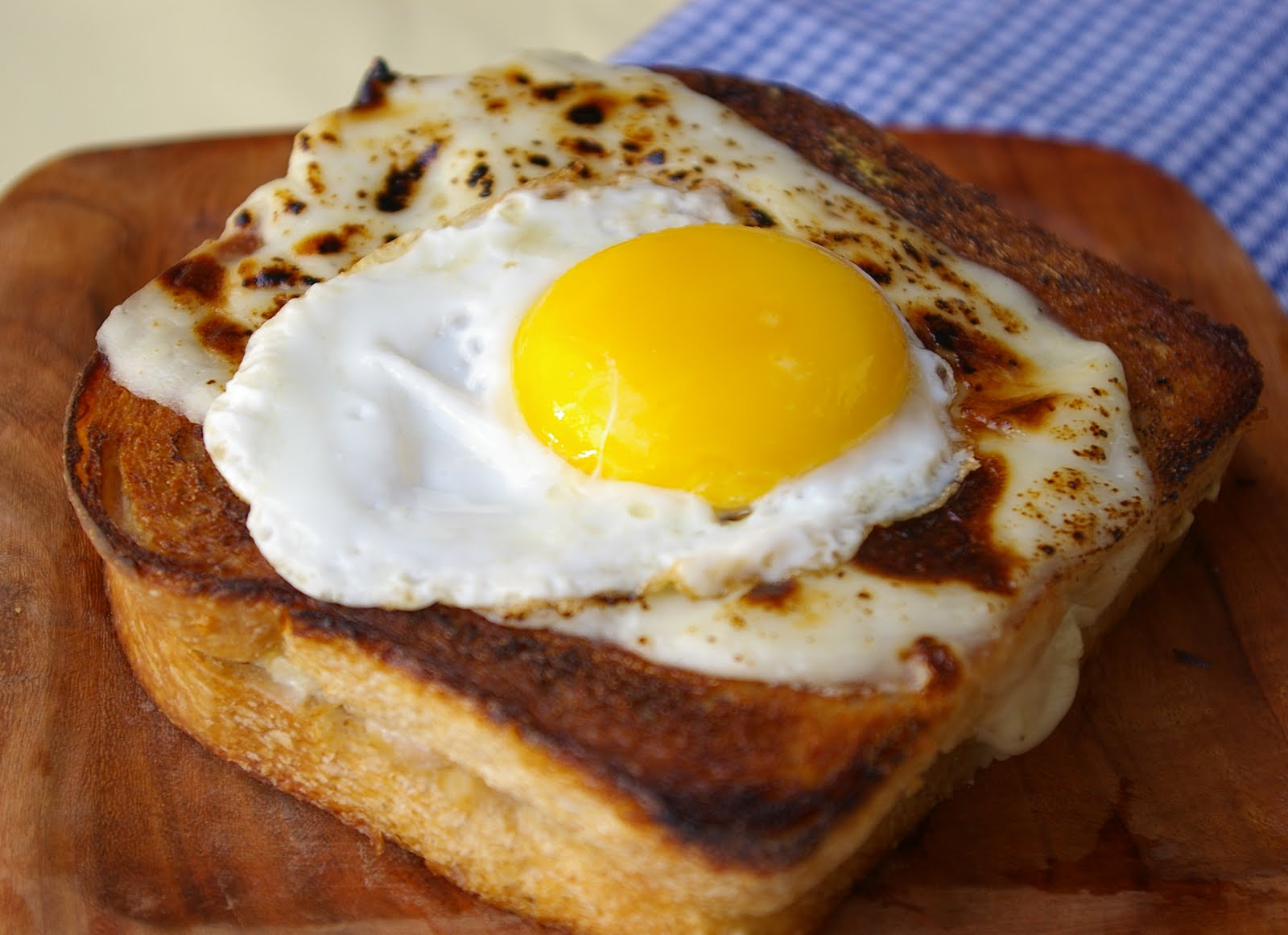
Save some sliced meat for the famous French croque-madame; it’s a croque-monsieur, made with Gruyere cheese and highly seasoned ham, with an egg on top. In this version, turkey replaces ham; butter-smeared toast and a rich mornay sauce still make the dish plenty rich. And serve it with knives and forks; this isn’t finger food.

Once the cheese sauce is prepared, keep it warm (it thickens as it cools and loses its velvety consistency). Spoon the sauce over the golden sandwiches and slide them under the broiler. Don’t go away; they will brown in seconds. The defining element is a sunny-side up egg, placed delicately on top so the yolk stays intact. The egg takes the sandwich from a simple monsieur to a decadent madame.

Roast turkey breast with root vegetables
Serves 4 with leftovers

2 medium turnips, cut into large wedges
2 small parsnips, cut into large wedges
2 shallots, halved
5 small red potatoes, cut into large wedges
Olive oil (for sprinkling)
Salt and pepper, to taste
3 pound boneless turkey breast
1/2 cup white wine or water
3 sprigs fresh thyme, leaves chopped

1. Set the oven at 350 degrees. In a large roasting pan, combine the turnips, parsnips, shallots, and potatoes. Sprinkle with olive oil, salt, and pepper.

2. Roast the root vegetables for 30 minutes.

3. Remove the pan from the oven, and stir the vegetables. Set the turkey breast in the center. Sprinkle with olive oil, salt, pepper, and thyme. Pour the wine or water onto the root vegetables.

4. Return the pan to the oven. Continue roasting for 45 minutes or until a meat thermometer inserted into the center of the turkey registers 160 degrees. (Total roasting time is 1 hour and 15 minutes.)

5. Remove the pan from the oven and let it rest in a warm place for 5 minutes. The meat temperature will rise to 165 degrees.

6. Transfer the turkey to a cutting board. Remove any strings or mesh bag from the meat. Cut the meat into slices. (Set aside 4 slices for the sandwiches.) Serve the turkey with root vegetables and any juices in the pan.

Turkey croque-madames
Serves 4

SAUCE

2 tablespoons butter
2 tablespoons flour
2/3 cup milk
1 ounce Gruyere, grated ( 1/2 cup)
Pinch grated nutmeg
Salt and pepper, to taste

1. In a skillet, bring several inches of hot water to a boil. In a small saucepan over medium-low heat, melt butter. Whisk in flour. Cook, stirring often, for 3 minutes.

2. Slowly whisk in milk. Bring the mixture to a boil. Lower the heat to medium-low and stir in the Gruyere. Season with salt, pepper, and nutmeg. Set the saucepan in the skillet to keep warm.

SANDWICH

3 tablespoons butter, at room temperature
8 slices sandwich bread
4 slices leftover turkey breast
2 ounces Gruyere, grated (1 cup)
Salt and pepper, to taste
4 eggs

1. Turn on the broiler. Have on hand 2 large skillets with ovenproof handles.

2. Lay out 4 slices of bread. Divide the turkey and Gruyere evenly among them. Season lightly with salt and pepper. Cover each with a slice of bread. Lightly butter top sides of the sandwiches. (Use 1 tablespoon now and 1 tablespoon later on the other side.)

3. Over medium heat, heat the skillets. Place 2 sandwiches, buttered sides down, in each skillet. Cook for 4 minutes or until golden on the bottom, pressing the tops lightly with a metal spatula. Butter the tops. Flip the sandwiches to cook the other side, pressing lightly, or until the undersides are golden.

4. Remove the sauce from the water; wipe the bottom. Spoon sauce over each sandwich, dividing it evenly. Place the skillets under the broiler and cook for 1 to 2 minutes or until the sauce is browned in spots and bubbling. Set aside in a warm place.

5. In a large nonstick skillet over medium heat, melt the remaining 1 tablespoon of butter. Crack the eggs, one at a time, into a bowl, then tip them into the skillet. Cook 3 minutes, or until the whites are set but the yolks are still runny. If you prefer a firmer yolk, cook for 1 minute more. Sprinkle with salt and pepper.

6. Using a wide metal spatula, slide 1 egg on top of each sandwich.

Grilled Cheese and Tomato Soup


With all the hoopla of my mom's milestone birthday celebration and a dear friend's bachelorette party/shower, I neglected to post my work that appeared in last week's Boston Globe. This article was a milestone of its own: my first lead story! Through a serious amount of digging, I was able to unearth quite a lot of information about the history of this dynamic duo. Today, there are chefs across the country doing really fun stuff with this comfortable, old standby. Be sure to click on the link below; there are a few great pics of the pairing - including an ad from Velveeta dating back to the 1950s. Plus, the site displays several variations on the grilled cheese theme.

Soup and Sandwich 2.0

It has all the qualities of classic comfort food: a steaming mug of sweet tomato soup served with a sandwich of melting cheese inside slices of golden buttery toast. Moms have been presenting grilled cheese sandwiches to happy children for decades.

Once relegated to kitchen tables, school cafeterias, lunch counters, and diners, this satisfying combo is making a comeback in popular culture and high-end restaurants, and is poised to become the new mac and cheese. Slices of processed cheese and ordinary white bread have been replaced by farmstead favorites and chewy or rich loaves. The top lunchtime seller at Woodward in the Ames Hotel consists of thick brioche, comté and Gruyere cheeses, tomato, and applewood smoked bacon. For dipping or slurping there’s a side of fresh tomato soup. “The brioche sops it up nicely,’’ says executive chef Mark Goldberg. At the gastropub Garden at the Cellar, Iggy’s dense pullman is grilled with Vermont cheddar, and at Restaurant Dante, every Tuesday night you can order a different $2 grilled Italian-inspired cheese sandwich. Owner Dante de Magistris says, “I love all types of food, but crunchy bread and oozy cheese is crazy satisfying.’’

Rick Katz sees a similar response. At Picco, diners indulge in Clear Flour’s sourdough bread slathered with a five-cheese mornay sauce, filled with cheddar and brushed with butter. “We offer more interesting panini,’’ says the South End restaurateur, “but none sell as well as grilled cheese.’’

Some say that the young renegade chefs of the last decade who wanted to stamp a menu with their own imprint brought the old-fashioned dish back in the limelight. Others credit celebrity chef Thomas Keller. In 1999, he described a grilled farmhouse cheddar and Early Girl tomato consomme in “The French Laundry Cookbook.’’ He describes it as “a dish straight out of American childhood, refined into haute cuisine.’’

If Keller is indeed the source of the updated classic, he’s spawned a host of food trucks and eateries across the country. San Francisco residents Tiffany Lam and Alex Rando operate a weekly street cart they call Toasty Melts, which offers seven variations and notifies customers of their whereabouts via Twitter (the most popular is ABC — apple, bacon, and cheddar). Instead of soup, Lam makes tomato sauce, which patrons use for dipping. Ohio is home to both Tom + Chee (a booth in Cincinnati’s Fountain Square) and Melt Bar & Grilled in Cleveland, where a tattoo of the restaurant’s grilled cheese logo earns patrons a 25 percent discount for life. Portland, Ore., has the Grilled Cheese Grill, a food stand where patrons dine at picnic tables or in a school bus. In Los Angeles, you can find the Grilled Cheese Truck, where hot weather calls for tomato soup shooters instead of soup in mugs.

All are playing to an audience primed to enjoy the duo. Americans consume an estimated 2 billion grilled cheese sandwiches every year, often with a serving of tomato soup. In its most iconic form, it is simply two slices of white bread, one slice of American cheese, a pat of butter, and a can of Campbell’s condensed tomato soup thinned with milk or water.

The combination is a post-World War II phenomenon, but both go back centuries. Winchester food historian Barbara Haber thinks it may have nomadic roots. “I picture ancient shepherds toasting chunks of bread and cheese over an open fire,’’ she writes in an e-mail. In the 18th and 19th centuries, Englishmen dined on baked cheese sandwiches. In “The Queen Cookery Books’’ series, S. Beaty-Pownall describes a popular technique in London at the turn of the 20th century: “Cut slices from some rich cheese, about one-third of an inch thick, and place these between slices of brown bread and butter . . . set these sandwiches in the oven and serve at once.’’

The British were not the only fans of gooey cheese and crisped bread. Jacky Robert, the French-born chef and owner of Petit Robert Bistro restaurants, describes the origins of croque-monsieur, which he was raised on. “A croque was a traditional way to serve old bread in Provence by dipping it in egg and herb,’’ he writes in an e-mail, then it was “pan fried to give a crunch.’’ The dish, called croque, was topped with ham and comte cheese in the early 1900s. When a waiter served it to an elegant gentleman, he would say, “Voici votre croque, monsieur.’’ (Here is your croque, sir.)

Tomato soup had a rockier entry into culinary annals. The red fruits, once believed to be poisonous, gained popularity in European kitchens in the 19th century and in the fashionable cream soups of the time.

Enter Campbell’s Soup Co., based in New Jersey and originally known as the Joseph Campbell Preserve Co. John T. Dorrance developed the formula for condensed soups in 1897; tomato soup was among the original five offerings. The idea was that homemakers needed only a can of water to thin the soup for serving. Lighter cans were cheaper to ship.

Around the same time, James L. Kraft, frustrated by the short shelf life of the cheese he peddled, turned it into “processed’’ cheese, which sustained soldiers in both world wars and was sold to the public in the 1920s as Kraft American Cheese. It was not until the 1940s that a growing fondness for sandwiches inspired a pre-sliced version of the cheese. Another 25 years passed before Kraft marketed individually wrapped singles. Wonder Bread unburdened homemakers who had to slice their own loaves by introducing packaged sliced bread in 1925.

Soldiers arrived home from war with a taste for processed foods. Lynne Olver of www.foodtimeline.org writes, “Government issue cookbooks tell us World War II Navy cooks broiled hundreds of ‘American cheese filling sandwiches,’ ’’ which she describes as “economical, easy to make, [and] met government nutrition standards.’’

The transition to the home front was easy. “These sandwiches were open-faced and usually made with prepackaged grated ‘American’ cheddar cheese,’’ Olver writes. “It wasn’t long before school cafeterias and other institutional kitchens followed suit. The usual accompaniment? Tomato soup.’’

Taking note of the trend, Campbell’s and Kraft began joint ads in the 1950s. Velveeta’s suggested, “to make the sandwiches into a main dish, serve them in hot, condensed tomato soup.’’ Company cookbooks emerged with serving suggestions. Campbell’s published “Modern Meal Planning With Soup,’’ wherein an open-faced, broiled cheese sandwich with bacon is partnered with tomato soup. Campbell’s representative John Faulkner calls it “a natural marketing opportunity.’’

Today, Facebook lists more than six pages for grilled cheese and/or tomato soup, some with over 300,000 fans. Medway native Tim Walker founded the Grilled Cheese Invitational in Los Angeles in 2003. The contest is held each year in April. At last week’s competition, 300 contestants and 8,000 spectators gathered to celebrate the “healing power of the combination of grilled cheese and tomato soup.’’ Walker’s favorite when he’s feeling “frilly’’ begins with slices from an olive loaf sandwiched with cave-aged Gruyere and caramelized onions. He describes it as a sandwich that makes you “push away from the table.’’

Lunch counters, of course, have remained loyal to the soup and sandwich pair. At Silvertone in Downtown Crossing, 60 percent of diners order tomato soup and grilled cheese. General manager Mary Palmer grew up on it in Rochester, N.Y. “We had to walk to school, and even though it was only about four blocks away, we’d be frozen by the time we got home.’’ They took off their wet clothes and mittens and sat down to soup and sandwiches.

Boston native Sol Sidell, owner of South Street Diner, has been grilling cheese for 14 years. His version uses American cheese and Italian bread. He offers the combo most of the day, and grilled cheese on its own 24/7. Sidell’s memories are also of the bitter cold, when he’d be offered his mom’s warming lunch of soup and grilled cheese.

“You can be the richest or the poorest person in the world and still enjoy it,’’ says Sidell. “It reminds you of where you came from.’’

(The photo above is from the 1960s, provided by Campbell's Soup Co.)
Wednesday, April 21, 2010

Don't Let Lunch Flunk


An unveiling of one of the many reasons that the blog has been a little neglected in recent weeks... The Boston Globe put together an article which continues to shed light on the disastrous state of our national diet and school lunch programs. The basis of the article is chef Jamie Oliver's notion that every person in the country should have a set of 10 (or so) recipes that they know how to cook. If this were the case, we, as a nation, would be far less dependent on fast-food, processed foods, and non-nutritious food-like substances.


With this idea in mind, The Boston Globe sought out 10 basic recipes from Boston area chefs. Some are vegetarian, some meat, some shellfish, others fish. These are straight-forward recipes, which run the full gamut of ingredients, and on the whole are fairly healthy. Besides supporting this idea wholeheartedly, I have a special vested interest in this group of recipes: I tested them all! Might I say that many are quite delicious. If you are thinking about eating out tonight or ordering a pizza, maybe you should reconsider. Choose a recipe - most won't take you longer than 30 minutes to prepare -- and then pat yourself on the back for a job well done while you savor the fruits of your labor.

Thursday, March 11, 2010

Fighting Childhood Obesity - Chili Mac & Quesadillas


The Boston Globe ran a story yesterday dedicated to the efforts being made to fight childhood obesity and better nourish our children. (Click on the previous link to read the full story and get tips on how to improve your family's health.) I contributed to the article by styling Sheryl's Sweet Potato Quesadillas (a tasty gem of a simple recipe) and creating/ styling the Chili Mac recipe. Both dishes contain lean proteins and an addition of more veggies than are found in traditional versions.

Sweet potato and turkey quesadillas with cheddar
March 10, 2010
Serves 4

2 large sweet potatoes
8 large flour tortillas
2 cups shredded cheddar
4 slices cooked turkey breast, cut into strips
Salt and pepper, to taste

1. Set the oven at 425 degrees. Pierce the sweet potatoes 6 or 8 times with a fork. Set them in a roasting pan and bake for 50 to 60 minutes or until they are tender when pierced with a skewer. Remove the potatoes from the oven; leave the oven on.
2. Let the potatoes sit until they are cool enough to handle. Halve them lengthwise and scoop the flesh into a bowl. Mash it with a fork.
3. On 2 large baking sheets, arrange 4 of the tortillas so they are not touching. Heat them in the oven for 3 minutes or until they are warm but still pliable; leave the oven on.
4. Line the tortillas up on the counter. Spread them with a thin layer of mashed potatoes, add a sprinkle of cheese, some turkey, salt, and pepper. Cover each round with another tortilla to make a sandwich. Return the tortillas to the hot oven.
5. Bake the quesadillas for 5 to 8 minutes more or until the top round is crisp and the cheese is melting at the edges. Transfer to a cutting board and cut the rounds into quarters.
6. Set 4 quarters on each of 4 plates.
Sheryl Julian

Chili mac
March 10, 2010
Serves 4

Old-fashioned versions of this classic rely on ground beef, ready-made tomato sauce, and regular pasta, and typically do not contain other vegetables. This updated recipe uses ground turkey instead of beef. Choose a mixture of white and dark meat, or use only ground breast meat for the leanest option. Bell pepper, celery, and zucchini provide a healthy dose of veggies; young diners may not even notice them in the dish. Use whole-wheat macaroni, but let the kids choose the shape. Elbows, shells, and even bow ties will work with this presentation. Top each bowl with a few pieces of avocado, giving the dish a fresh look and healthy fats.

1 teaspoon olive oil
1 pound ground turkey (mixture of white and dark meat)
1 small onion, chopped
1 red bell pepper, chopped
2 stalks celery, chopped
1 clove garlic, chopped
Salt and black pepper, to taste
2 tablespoons chili powder
1 teaspoon dried oregano
1/2 teaspoon ground cumin
1 cup water
1 can (28 ounces) diced tomatoes
1 can (15 ounces) kidney beans, with their liquid
2 small zucchini, chopped
1/2 pound whole-wheat macaroni or other small pasta
1 avocado, peeled and chopped

1. In a large flameproof casserole, heat the olive oil over medium-high heat. Brown the turkey, breaking it up with a spoon, for 5 minutes or until it begins to brown.
2. Add the onion, bell pepper, celery, garlic, salt, and black pepper. Cook, stirring often, for 5 minutes or until the vegetables begin to soften.
3. Add the chili powder, oregano, and cumin. Stir for 1 minute.
4. Add the water and tomatoes. Bring to a boil, lower the heat, and simmer for 10 minutes.
5. Stir in the kidney beans and zucchini. Return liquid to a boil. Lower the heat, and simmer for 30 minutes. Taste for seasoning and add salt and black pepper, if you like.
6. Bring a large pot of salted water to a boil. Add the macaroni or other pasta. Cook, stirring occasionally, for 7 minutes or until pasta is tender but still has some bite. Drain the pasta into a colander; shake it but do not rinse.
7. Divide the noodles among 4 deep bowls. Top with chili and garnish with avocado.