Showing posts with label Seafood. Show all posts

Friday, September 3, 2010

Hog Island - Tomales Bay


We've loved Hog Island oysters and their seafood bar at the Ferry Building for a long time now, but when you want to avoid the crowds and enjoy a serene picnic on the water, Tomales Bay is where its at!


Not only can you enjoy a perfectly packed picnic, but you can check out the farm as well -- watching the sorter spin round and round as hundreds of tiny bivalves fall to one side or the other.


Whole wheat pasta salad with grilled sardines

Serves 4-6

½ pound whole wheat pasta
Salt and pepper, to taste
1 large tomato, chopped
1 small red onion, finely chopped
1 clove garlic, minced
1 teaspoon red pepper flakes
1 tablespoon chopped fresh oregano
1 tablespoon capers
½ cup chopped olives
2 tablespoons olive oil
2 tablespoons red wine vinegar
2 tablespoons African basil flowers (or chopped basil)
Salt and pepper, to taste
8 whole sardines, fileted
Olive oil, for rubbing

1. Bring a large pot of salted water to a boil. Add the pasta, and cook for 7 minutes, or until al dente.
2. Drain pasta water, and set noodles aside.
3. In a large bowl, combine all other ingredients. Add warm pasta, and toss.
4. Let stand for 1 hour at room temperature. Set the oven to broil, or heat a grill to high heat.
5. De-bone sardines and portion into filets (you can also ask your fishmonger to do this for you). Season each side with salt and pepper. Rub each filet with olive oil.
6. Place the sardines on a metal baking sheet or sizzle plate. Broil or grill for 2-3 minutes, skin side down, or until cooked through.
7. Remove sardines from pan, and serve atop pasta salad.


A special thanks to Diana, the photographer for the day, since I forgot my memory card. And, thanks to Nick, whose name-dropping even saved us a few pennies!

Tuesday, August 10, 2010

Fishing For A Feast


I'm not much of a fisherwoman, although I do enjoy the idea of catch-your-own. Destin's charter boats make it easy for you. Despite the ginormous BP disaster, the waters here are cleared for swimming and fishing. After a whole day on the water, we went away with a collection of almost 40 snappers and trigger fish. Back at the condo and safe on land, we have carefully prepped and frozen everything that we won't eat this week. My parents will be taking it home for future good times. Until then, we plan to cook up grilled trigger fish tacos (with Kenny's Uncle Ivan's Special 7 chili blend) and pan fried snapper with green tomatoes. We're still thinking of more ways to prepare it. Stay tuned. And, a huge thank you to the guys at Sweet Jody Fishing for helping us to reel in such a fantastic catch!

Thursday, June 10, 2010

Puttanesca Sauce - Two Ways


Chicken and penne mixed up in some saucy stories
By Karoline Boehm Goodnick, Globe Correspondent | June 9, 2010

Hot and lively, much like the ladies of easy virtue after whom the dish was named, puttanesca sauce originated in southern Italy. Puttana is the Italian word for prostitute, and there are several tales spun about the dish. Some believe that the intense aromas of garlic, anchovies, and olives lured potential customers, who were served pasta and sauce while waiting for the next available girl. Others say the sauce’s strong flavors are symbolic of the women of the night. Yet another account suggests that state-run brothels in the 1950s were only required to give their employees one day off a week, so they depended on sauces made with shelf stable ingredients.

The original working girls knew a little something about how to use their time. Easy to make in large quantities, puttanesca is a 30-minute sauce. Use it fresh from the pot to top pounded, sauteed chicken breasts. Later in the week, dress penne with puttanesca. Adapt the recipe to your tastes, adding more or less garlic, crushed red pepper, or anchovies.

Broccoli rabe, also known as rapini, is a leafy, slightly bitter version of its well-known relative. It is quite popular in Italy and makes a good partner for puttanesca. Blanch it quickly to remove some bitterness and soften the vegetable. Later, saute garlic with the greens to heighten the flavor. Chop any leftover broccoli rabe and stir it into the penne. Spicy puttanesca and bitter rabe is a pairing the saucy women would have liked.

Chicken with puttanesca sauce

Serves 4, with leftovers

SAUCE

2 tablespoons olive oil
1 medium onion, chopped
3 cloves garlic, chopped
4 anchovy fillets, chopped
1 teaspoon crushed red pepper
1/2 teaspoon dried oregano
1/2 cup red wine
2 tablespoons capers
1 cup pitted Kalamata olives
2 cans (28 ounces) diced tomatoes
Salt and black pepper, to taste

1. In a large flameproof casserole over medium heat, heat the olive oil. Add onion and garlic and cook, stirring occasionally, for 5 minutes or until softened.

2. Add the anchovies, red pepper, and oregano. Cook, stirring constantly, for 1 minute or until the spices release their aromas.

3. Add wine, and simmer until it reduces by half.

4. Add the capers, olives, tomatoes, salt, and pepper. Bring to a boil, lower the heat to medium, and simmer for 20 minutes, or until tomatoes form a chunky sauce. Taste for seasoning and add more salt and black pepper, if you like.

5. Reserve 2 1/2 cups sauce for the penne. Set the remaining sauce aside for the chicken.

CHICKEN

4 skinless, boneless chicken breast halves
Salt and black pepper, to taste
2 tablespoons canola oil

1. Heat oven at 400 degrees. Place the chicken breasts, 2 at a time, between 2 large sheets of plastic wrap. Use the smooth side of a meat mallet or the bottom of a heavy skillet to pound the breasts to about 1/2-inch thickness. Sprinkle with salt and black pepper.

2. In a large heavy skillet with a heatproof handle, heat the canola oil over high heat. Add the chicken and cook for 4 to 5 minutes or until golden on the bottom. Turn and transfer the skillet to the oven.

3. Continue cooking the chicken for 5 minutes or until it is cooked through. Transfer to a plate.

4. Return the skillet to high heat. Add the puttanesca sauce that you reserved for the chicken. Bring the sauce to a boil. Place 1 chicken breast half on each of 4 dinner plates. Top each breast with puttanesca sauce. Garnish with broccoli rabe.

Broccoli rabe

Serves 4

Salt and pepper, to taste
1 bunch broccoli rabe, ends trimmed
2 tablespoons olive oil
2 cloves garlic, thinly sliced
1/4 cup bread crumbs
1/4 cup grated Parmesan

1. Turn on the broiler. Bring a large pot of salted water to a boil. Add broccoli rabe and return the water to a boil. Cook for 1 to 2 minutes, or until the broccoli rabe is almost tender but still bright green.

2. Drain the broccoli rabe and rinse with cold water.

3. Squeeze the broccoli rabe to remove excess water. Pat it dry with paper towels.

4. Wipe out the skillet. Add the olive oil. Add the garlic, and cook, stirring constantly, for 1 to 2 minutes or until it begins to soften.

5. Add the broccoli, and cook, stirring constantly, for 3 minutes or until it is tender and beginning to brown.

6. In a bowl, combine the bread crumbs and Parmesan. Sprinkle the mixture over the broccoli. Place the pan under the broiler, setting it about 8 inches from the element. Broil for 1 minute, watching the pan carefully, until the crumbs are golden.

Penne puttanesca

Serves 4

2 1/2 cups puttanesca sauce
Salt and pepper, to taste
1 pound penne
1/4 cup chopped parsley
1/4 cup grated Parmesan

1. In a large flameproof casserole, bring the puttanesca to a boil. Lower the heat, cover the pan, and keep warm.

2. Bring a large pot of salted water to a boil. Add the penne and cook for 8 minutes, stirring often, or until pasta is tender but still has some bite.

3. Drain the pasta.

4. Add a ladle of sauce to each of 4 shallow bowls. Add pasta to each bowl. Top with more sauce. Garnish with parsley and Parmesan.

Wednesday, May 19, 2010

Machas!!!


Parmesan Clams from the Boston Globe 5.19.10

Serves 4

In Chile, where this popular dish is called machas a la parmigiana, you’ll find it made with Pacific razor clams. New England littlenecks make a fine substitute. Although Parmesan and shellfish seem an unlikely pair, the results are delectable. Steam the bivalves open, and then thicken the juices with a little cornstarch to maintain the briny sea flavors and balance the richness of the cheese. Here, the cheese is a combination of Asiago and Parmesan. The clams combine elements of the Mediterranean and the Pacific. Serve this appetizer before big bowls of pasta dinner or as part of a barbecue.

3 tablespoons white wine
1 clove garlic, finely chopped
1 tablespoon olive oil
18 littleneck clams
1 tablespoon water
1 teaspoon cornstarch
Juice of 1/2 lemon
Salt and pepper, to taste
3/4 cup grated Asiago cheese
1/2 cup grated Parmesan cheese
2 tablespoons finely chopped parsley

1. Turn on the broiler. Have on hand a 12-inch baking dish.

2. In a large pot, bring the wine, garlic, and olive oil to a boil. Add the clams and cover with the lid. Steam clams for 5 minutes or until they just begin to open.

3. Using a slotted spoon, remove clams from the liquid and set aside until cool enough to handle.

4. Stir the water and cornstarch until smooth. Whisk the cornstarch mixture and lemon juice into the clam cooking liquid and cook, stirring, for 1 minute or until it thickens. Taste for seasoning and add salt and pepper.

5. Snap off and discard the top of each clam shell. Loosen the clam meat from the other shell, but do not remove it. Set the clams in the dish.

6. Add a spoonful of cooking liquid to each clam. In a bowl, mix the Asiago and Parmesan cheeses. Top the clams with grated cheese.

7. Broil the clams, checking them often, for 5 minutes or until the cheese is golden brown and bubbly. Sprinkle with parsley.

Wednesday, March 24, 2010

Marcia's Clam Pizza


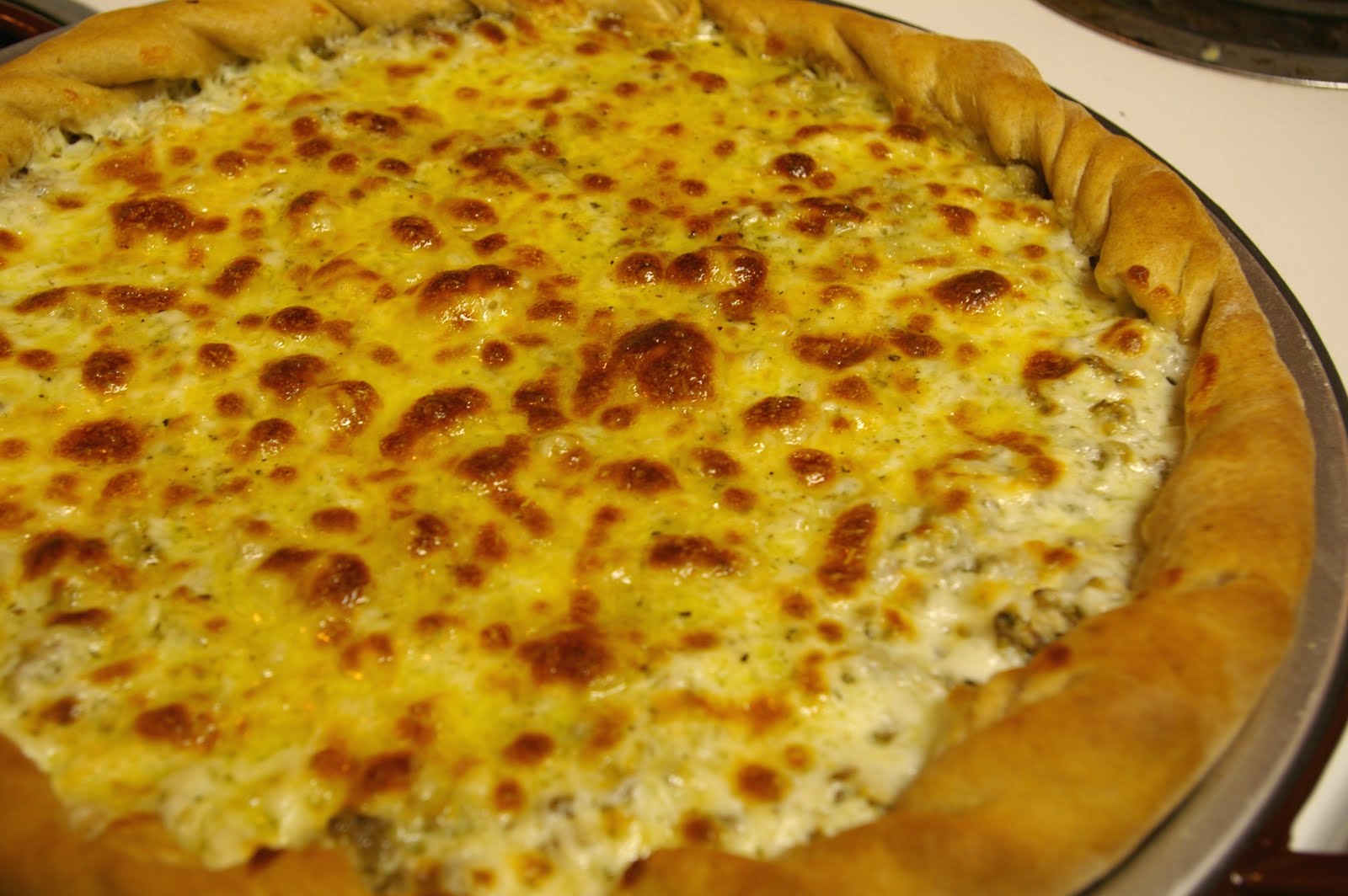
On a recent visit, my mom and I worked on a recipe that she has perfected down to an art form -- clam pizza. This version is white, but you could add tomatoes if you were so inclined. Use a jar of clams or shuck your own. For the cheese topping, we used a blend of mozz, parm, reggiano, and provolone from Lucca Ravioli Co. St. Louisians have their own similar version called Provel. Any flavorful white blend will do. Make your own dough or use a supermarket version.

The key is in the heat of oven. Set the temperature as high as it will go. Don't be shy - trust me. It also helps if you have a pizza stone or cast iron pan. For her method, the pizza is assembled on a metal pizza screen. The stone or cast iron stays in the oven, getting good and raging hot. Once the pizza is fully assembled, slide the whole thing, screen and all onto the stone. After baking, remove the entire apparatus. The stone or cast iron will retain heat and keep your pie warm while you devour the first few slices.

Serves 2-4

9.5 ounces clams, drained
1 teaspoon dried oregano
2 cloves garlic, finely chopped
2 tablespoons olive oil
Flour, for rolling
1 pound pizza dough (we used this whole wheat recipe)
Salt and pepper, to taste
8 ounces "pizza" cheese
Olive oil, for drizzling

1. In a small bowl, combine the clams, dried oregano, garlic, and olive oil. Marinate for 20 minutes. (You can do this while the pizza dough is rising if you make your own.)
2. Set the oven at 550 degrees (or as high as your oven will go). Place your stone or cast iron pan in the oven on the bottom shelf.
3. On a lightly floured surface, roll out the pizza dough to a circle that is 1/2 inch larger than the metal pizza screen.
4. Transfer the dough to the screen. Gently roll the edges, crimping and sealing as you go, forming the outer crust.
5. Sprinkle the clam mixture over the pizza. Season with salt and pepper. Top the pizza with cheese. Drizzle with olive oil for extra browning.
6. With the pizza on the metal screen, set the whole thing on top of the stone that has been pre-heated in the oven. Bake for 7-10 minutes or until the cheese is brown and bubbling. Remove both pans from the oven and allow to cool 5 minutes before serving.

Wednesday, March 3, 2010

Baked Trout with Lemon and Paprika


Also in today's Globe!

Serves 4

Finding time to cook a fancy meal for company sometimes seems as likely as a celebrity chef showing up to fill in. If you can find boned and butterflied whole trout, which cook in a very short time, they make a beautiful presentation. Fill the cavities with lemon, thyme, and garlic and bake the fish inside foil packets to keep the flesh moist during baking. Serve with steamed potatoes sprinkled with parsley and black pepper.

1 teaspoon olive oil
4 whole boned trout, butterflied
Salt and pepper, to taste
1/2 teaspoon paprika
2 cloves garlic, thinly sliced
1 lemon, thinly sliced
8 sprigs fresh thyme
1/4 cup white wine

1. Have on hand a rimmed baking sheet. Set the oven at 350 degrees.

2. Cut 4 sheets of foil (each 16 inches long); line them up on the counter. Brush each piece of foil with olive oil. On the center of the foil, place 1 whole trout, skin side up; season with salt and pepper. Flip the fish over and season the flesh side with salt and pepper. Sprinkle with paprika.

3. Divide garlic and lemon slices among the fish. Top with thyme, dividing evenly. Sprinkle white wine over each. Fold one fillet over the other, closing up the trout.

4. Fold the foil up and around each fish, and make a seal on top. Set the packets on the baking sheet.

5. Bake for 10 minutes or until the fish is firm and opaque.

Wednesday, January 27, 2010

Shrimp Stew


Ben threw this dish together in less than 30 minutes while I tickled the keys of my computer, but in my defense, I did make the fish stock. Fish stock is a frugal way to use up otherwise discarded scraps like shrimp shells, fish heads, and lobster bodies. Each time we enjoy one of the above, we pack up the leftovers in plastic and toss them into the freezer. Once we have sufficient material, we combine the remnants with water, onion, celery, mushrooms, bay leaves, peppercorns, parsley stems, and a splash of white wine. The easiest way to make stock is in a slow cooker. Cook for 4 hours on low. Strain and set aside or freeze.

Clean Fish, based in San Francisco, but available in restaurants and some markets nation wide, are the famous, sustainable brokers who put themselves on the map with Loch Duart salmon. We love Clean Fish not only for their eco-friendly policies but their sweet, succulent Laughing Bird White Caribbean Shrimp.

Mount Eden, a Santa Cruz Mountain winery long supported by my father, makes elegant whites and reds. This evening, we cracked a 2006 estate-bottled chardonnay -- the perfect match for this stew and the Laughing Bird shrimp in particular.

Sit down at your table, pour the wine, ladle the soup, and imagine yourself seaside.

(The above photo was taken at Santiago de Chile's Mercado Central.)

1 teaspoon olive oil
1 onion, finely chopped
1 carrot, finely chopped
2 stalks celery, finely chopped
3 cloves garlic, minced
1 1/2 cups diced tomatoes
2 red potatoes, roughly chopped
4 cups fish stock
1/2 pound shrimp, peeled and de-veined
Salt and black pepper, to taste
1/2 cup chopped parsley

1. In a large flameproof casserole, heat oil over medium-high heat. Add onion, carrot, celery, and garlic. Cook, stirring, for 5 minutes or until tender.
2. Add tomatoes, potatoes, and fish stock. Bring to a boil. Reduce the heat, and cook for 20 minutes or until potatoes are tender.
3. Add shrimp. Cook for 4 minutes. Taste, and season with salt and pepper. Stir in parsley. Ladle into bowls and serve with garlic rubbed toast, if you like.

Tuesday, December 29, 2009

Cured/ Smoked Salmon - Part 1 of 2


Given that I have eaten nothing but smoked salmon sandwiches for breakfast for the past 3 months, there is a strong possibility that without it, I will cease to survive. So, it is with serious desire to avoid an untimely death before I even make it to the dreaded 3-0 that I embark on this two-stage process of curing and then smoking a side of salmon. The neufchatel that I typically schmear on my homemade whole-wheat sourdough will be sorely missed in 2010, but alas, I don't have the skill set to take on that beastly burden -- not yet anyways.

Curing a whole side of salmon is actually quite easy -- assuming you have the financial wherewithal to drop $60 at the rip-off that is your neighborhood foodie haven. Begin by cleaning the fish and scoring the skin side so that it does not curl up and the salt has a chance to fully penetrate the flesh. Liberally cover the salmon, top and bottom, with the cure as well as dill for flavor, and wait several days. At this point, the fish will be delicious but void of its signature smoky flavor. Slice some off for nibbling and then proceed to the smoking process -- to be described in detail in the coming week.

Makes 1 full side of salmon

4 cups sea salt or kosher salt
1 cup brown sugar
1 cup white sugar
1 side of salmon, about 4 pounds
1 bunch dill, washed and well dried
black pepper, to taste

1. In a large bowl, stir together salt, brown sugar, and white sugar.
2. Remove all of the pin bones from the fish. This is most easily accomplished by running your index finger down the center of the fillet until you feel something hard and pointy. Using needle-nose pliers, carefully extract each bone.
3. Using a sharp boning knife, remove any visible white membranes from the surface.
4. Score the skin side of the fish deeply enough to penetrate the skin but not the flesh. Do this in 3 long diagonal strokes.
5. Place a wire rack on a baking sheet. Place a piece of cheesecloth large enough to fully envelope the fish on the rack.
6. Sprinkle a thick layer of the salt/sugar mixture onto the cheesecloth. Lay several sprigs of dill on top of the cure.
7. Lay the fish, skin side down, on top of the dill.
8. Season the flesh liberally with black pepper. Place the remaining sprigs of dill on the flesh.
9. Cover the top and sides of the salmon with the remaining cure. Make sure that you cannot see any of the flesh poking out of the cure.
10. Pull the cheesecloth up and over the top, covering the entire fish.
11. Place a baking sheet on top of the fish and weigh it down with a heavy pot.
12. Place the entire apparatus in the refrigerator for 3 days.
To be continued...

Saturday, December 19, 2009

Caesar's Clams


In the 1970's, my mom attended a classic French cooking school called Dumas Pere. During these classes, several of the students joined together to form a gourmet dinner party group. As an infant, I was allowed to attend these parties; I have a little chuckle each time I see the picture of my dad holding a bulbous Bordeaux glass up to my tiny newborn nose so that I might appreciate the aromas of what I am sure must have been a very elegant wine. As I got older -- read more annoying -- I usually watched T.V. upstairs and came down only to sample desserts. Desserts were always my favorite part -- occasionally, I would wait until the next day to wolf down the leftover cake or tart as my breakfast before anyone else was awake. Eventually, I began to take more interest in their soirées. I even tried to replicate a fancy dinner for my parents as a surprise when they had left me home to babysit my brother. Oh, I do pity them for having to smile and choke down whatever atrocity my 10 year old self managed to throw together. By the time I could really participate in these dinners, the group had shrunk to only four. Luckily, it was my favorite four: my parents plus Jerry and Madelyn.

In their most recent dining adventures, there has been one consistently present dish; Caesar's clams. Caesar, Madelyn's father, created a recipe for baked clams that is at once both simple and exquisite. They served them on Christmas Eve -- just before a big bowl of cioppino. It's classic -- nothing fancy here. Classics endure for a reason. You'll know why if you try it. I made them for our holiday party this week, and they were a hit. So, thank you, Maddy, for years of inspiration and support. And, many, many thanks for sharing your dad's recipe.

If I were to make this recipe, I might change a few things. For example, I like to make and season my own bread crumbs. However, the recipe is just right, just as it is.

2 dozen little neck clams
2 teaspoons dried oregano
1 tablespoon garlic powder
1/2 cup Progresso Italian bread crumbs
olive oil, to taste
lemon wedges and parsley sprigs, for garnish
hot sauce, to taste

1. Set the oven at 375 degrees. Have on hand a baking sheet lined with aluminum foil.
2. In a microwave on medium power, heat the clams for 30 seconds or until they begin to open. (You may also do this on the stove in a heavy bottomed sauce pot.) Either way, you don't want to cook the clams, merely open them.
3. Carefully shuck each clam, discarding the top shell and loosening the clam from the bottom shell. Place on the baking sheet.
4. Top each clam with oregano, garlic powder, and bread crumbs.
5. Drizzle the olive oil over the top.
6. Bake for 5 to 10 minutes, or until the breadcrumbs are golden brown.
7. Garnish with lemon and parsley. Season with hot sauce, if you like.

These photos are courtesy of my mom. She's pictured on the right; Maddy is on the left.

Thursday, November 12, 2009

Grilled Snapper with Shellfish Broth


For this dish, make sure to get the grill nice and hot. If it is too cool, the fish will stick. To time it right, place the fish on the grill right before you add the potatoes to the pot. After approximately 10 minutes, the skin will release itself from the grate when one side is fully cooked; then, you will know that it is time to flip. The skin should be brown and crispy by the time the fish is done. If snapper isn’t available, substitute branzini, dourade, or loup de mer. It is even possible to use whole walleye or large mouth bass that you caught yourself. This recipe will serve four light eaters. To make the recipe for two, use less shellfish.

Serves 4

1 teaspoon olive oil
1 red onion, chopped
1 carrot, chopped
1 yellow bell pepper, chopped
½ cup white wine
1 yukon gold potato, cut into matchsticks
1 ½ cups water
2 scallops (about 3 ounces), sliced in half horizontally
3 ounces shrimp, peeled and de-veined
4 oysters, shucked
3 ounces crabmeat
Zest and juice of one lemon
1 tablespoon chopped parsley
Salt and pepper, to taste
3 cloves garlic, sliced
1 bunch spinach

1. In a heavy-bottomed pot, heat olive oil over medium heat. Add red onion, carrot, and bell pepper. Stir; cook for one minute. Add white wine; cover and cook for 5 minutes.
2. Add potatoes and water; stir. Cover and cook for 10 minutes, stirring occasionally.
3. Add scallops; cook for 3 minutes, covered. Add shrimp; cook for 1 minute. Remove pot from heat; add oysters and crabmeat. Stir in lemon zest and parsley. Season with salt and pepper. Set aside, covered.
4. Heat a large sauté pan over high heat. Add garlic and ¼ cup wine; bring liquid to a simmer. Add spinach; cook until the leaves are wilted and the liquid is evaporated. Season with salt and pepper.
5. Arrange spinach on a large platter. Arrange vegetables, shellfish, and broth on top of spinach. Set grilled fish on top. Serve tableside.

FISH
1 whole snapper (about 1 ¼ pounds), scaled and gutted
2 tablespoons olive oil
Salt and pepper, to taste

1. Heat a gas or charcoal grill until very hot.
2. Score the skin of the fish with two long diagonal slits on both sides.
3. Brush the fish with olive oil and season with salt and pepper. Season the inside cavity of the fish as well as the skin.
4. Place directly over hottest coals or in the hottest area of a gas grill. Cook for 20 minutes or until skin is crispy and flesh yields slightly to the touch.