Showing posts with label Meat. Show all posts

Wednesday, October 6, 2010

Lamb & Figs


Roast lamb with figs, and then roll out the flatbread
By Karoline Boehm Goodnick, Globe Correspondent | October 6, 2010

Once a common roast for midday Sunday dinner, leg of lamb has lost its place of prominence. One reason is that the joint is known to be hard to carve. But now legs come boned and rolled and take about an hour to roast. With shared Mediterranean origins, lamb and figs are a natural match. Add couscous, a North African staple, and you have an appealing plate. Rub the meat with a smoky, sweet combination of paprika and rosemary. Halfway through roasting, surround the lamb with chopped fresh mission figs so their juices meld with the drippings. While the meat rests after roasting, make a quick pan sauce that will serve you again on flatbreads.

Whether you call it pizza or flatbread, this stylish pie has been embraced by chefs everywhere, and is a terrific way of repurposing leftovers. Buy pizza dough, divide it into pieces, then flatten them (don’t worry if you’re not good at this; misshapen rounds add rustic elegance). Top each with fig sauce, arugula leaves, lamb, and goat cheese. Bake them near the bottom of the oven until they’re firm and golden, then sprinkle with balsamic vinegar and olive oil. New England practicality meets modern flare.

Roast leg of lamb with figs

Serves 4, with leftovers

1 boned rolled leg of lamb (3 1/2 pounds)
3 cloves garlic, halved
Salt and pepper
2 tablespoons chopped fresh rosemary
1 tablespoon paprika
2 tablespoons olive oil
18 fresh black mission figs, stemmed and chopped
1 cup red wine
2 tablespoons balsamic vinegar
2 tablespoons honey

1. Set the oven at 450 degrees. With a small knife, cut 6 small slits in the lamb, and place 1/2 clove garlic in each slit. Sprinkle lamb with salt and pepper.

2. In a small bowl, mix together rosemary, paprika, and olive oil. Rub lamb with the rosemary mixture. Set it in a large cast iron skillet or heavy roasting pan (not ceramic).

3. Roast the lamb for 20 minutes. Lower the oven temperature to 325 degrees. Continue roasting for 15 minutes. Remove the pan from oven and set the figs around the edges of the pan. Roast for 20 minutes or until a meat thermometer inserted in the center of the meat registers 125 to 130 degrees for rare lamb. (Total roasting time is 55 minutes.) For medium to well-done meat, continue roasting for 5 to 10 minutes or until the temperature reaches 145 to 160 degrees.

4. Transfer the roast to a metal rack set over a plate. Let it rest for 5 minutes (the temperature will continue to rise a few degrees).

5. Pour off the fat from the pan, keeping the juices. Place the pan on a burner over high heat. Add the wine and vinegar. Bring to a boil, stirring constantly, and let it bubble for 5 minutes. Add honey, salt, and pepper. Set aside 1 1/2 cups sauce with some figs in it for the flatbreads.

6. Discard twine from lamb. Carve the lamb on a slight angle into thick pieces. Set aside 1/4 of the lamb for the flatbreads.

7. Divide the remaining lamb and couscous among 4 plates. Ladle fig sauce over the lamb.


Fig and lamb flatbreads

Serves 4

Olive oil (for sprinkling)
2 pounds commercial pizza dough
Flour (for sprinkling)
1 1/2 cups fig sauce from lamb
2 cups fresh arugula, stemmed
2 cups chopped roast lamb
8 ounces fresh goat cheese
Salt and pepper, to taste
Balsamic vinegar (for sprinkling)

1. Set the oven at 500 degrees. Position a rack at the lowest part of the oven. Lightly oil 2 large rimmed baking sheets.

2. Punch down the dough. Divide it into 8 equal pieces. Dust each lightly with flour, and cover 7 of them with a clean towel. Using a rolling pin, roll 1 ball firmly and evenly, flattening it into a 6-inch disk, dusting with flour when the dough becomes sticky. Slip it under the towel and shape the remaining rounds in the same way. Divide the rounds between the baking sheets.

3. With the back of a spoon, spread about 3 tablespoons of fig sauce on each round, then add 1/4 cup arugula, 1/4 cup chopped lamb, 2 tablespoons goat cheese, salt, and pepper.

4. Bake the pizzas for 5 minutes or until the crust is firm and golden. With a wide metal spatula, transfer the pizzas to a large platter. Sprinkle with balsamic vinegar and pepper. Brush crust with olive oil.

Wednesday, August 11, 2010

Sausage & Peppers To Dirty Rice


Italian sausages and peppers
August 4, 2010

Italian sausage and bell peppers make a hearty pair, no matter how you do them — grilled and lightly charred, braised in beer, slow cooked, served on a bun, or tossed with pasta.

Another great way to present the satisfying duo is to cook them in a skillet and spoon them over soft polenta. Brown the sausages and remove them from the pan, then cook the onions and peppers in the meaty bits. Simmer them together in beer. Stir a potful of golden polenta while they cook. Slowly stream polenta flour into boiling water and keep stirring until it thickens. Season with butter and cheese.

The following day, leftover sausages, peppers, and onions become dirty rice, a Cajun specialty in which ground meat muddies (in a good way) white grains. The mixture is cooked pilaf style, typically with chicken livers. Cooking the livers separately guarantees a crispy exterior and pleasant flavor. Chop them finely and stir them into the cooked rice with a classic New Orleans garnish of scallions and parsley. Serve with a splash of Louisiana hot sauce. Beads optional.

Serves 4, with leftovers

SAUSAGES

1 tablespoon vegetable oil
10 Italian sausage links (mixture of hot and sweet), pricked well all over
5 bell peppers (red, yellow, green), cored, seeded, and thinly sliced
2 large red onions, thinly sliced
1 bay leaf
1 sprig fresh oregano
12 ounces lager beer
1/4 cup red wine vinegar
Salt and pepper, to taste

1. In a large flameproof casserole with a tight fitting lid, heat the oil over high heat. Add sausages and cook, turning several times, for 5 to 7 minutes or until nicely browned. Transfer to a plate.

2. Add peppers and onions. Cook, stirring often, for 8 to 10 minutes or until tender. Return sausages to pan. Add bay leaf, oregano, beer, vinegar, salt, and pepper. Bring to a boil, lower the heat, cover, and simmer for 5 minutes. Remove lid, and continue cooking, stirring occasionally, for 10 minutes more.

3. Taste for seasoning, and add more salt and pepper, if you like. (Reserve 4 sausages and 1 1/2 cups peppers and onions for dirty rice.)

POLENTA

3 1/3 cups water
Salt and pepper, to taste
1 cup coarse polenta flour
1 tablespoon butter
1/2 cup freshly grated asiago or Parmesan cheese

1. In a large saucepan, bring the water and a large pinch of salt to a boil. Stirring constantly with a wooden spoon, add the polenta in a slow, steady stream. Reduce the heat to medium low. Simmer, stirring often, for 20 minutes or until the polenta is thick and smooth.

2. Stir in butter, cheese, and pepper. Taste for seasoning, and add more salt and pepper, if you like.

Dirty rice

Serves 4

Cajun seasoning is a ready-made mixture of ground peppers, usually including garlic powder. You can make your own combination of ground chili powder, cayenne pepper, and black pepper.

3 tablespoons vegetable oil
3 stalks celery, thinly sliced
3 cloves garlic, chopped
4 cooked Italian sausages, crumbled
1 1/2 cups cooked peppers and onions
2 tablespoons Cajun seasoning (available at specialty markets)
1 1/2 cups basmati or other long-grain white rice, rinsed
2 1/4 cups chicken stock
Salt, to taste
3 tablespoons flour
1/2 pound chicken livers (optional)
2 tablespoons butter
3 scallions, thinly sliced
3 tablespoons chopped parsley
Hot sauce (for serving)

1. In a large flameproof casserole over medium-high heat, heat 1 tablespoon of the vegetable oil. Cook the celery and garlic, stirring often, for 3 minutes.

2. Add the sausage and pepper mixture, and 1 tablespoon of Cajun seasoning. Cook, stirring, for 1 minute.

3. Stir in the rice, chicken stock, and salt. Bring to a boil, lower the heat, cover the pan, and simmer for 15 minutes.

4. In a shallow bowl, combine the remaining 1 tablespoon Cajun seasoning, flour, and salt.

5. Pat the chicken livers dry with paper towels. Toss chicken livers in flour mixture to coat them.

6. In a skillet over medium high heat, heat the remaining 2 tablespoons vegetable oil. When it is hot, add the butter. Cook the chicken livers 3 to 5 minutes on a side until they are firm and golden. Transfer to a plate lined with paper towels. When livers are cool enough to handle, chop roughly.

7. Stir livers into the rice mixture. Add scallions and parsley. Taste for seasoning, and add more salt, if you like. Serve with hot sauce.

Thursday, July 15, 2010

Lamb and Pita Dinner

A couple of weeks ago, we bid bon voyage to our friend, Suzan, who was on her way to visit family in Turkey. Inspired by her travels, we put together a quick dinner consisting of a few bits and pieces of a lot of eastern Mediterranean cuisines. We started the night off right with a Greek style saganaki, made popular in our home town of Chicago: fried Haloumi cheese, flamed in the pan and finished with a squirt of lemon juice. Let's just say that we were lucky not to have to call the firemen!


The rest of the meal consisted of an eclectic collection of cucumber salad (similar to tzatziki), brown basmati rice cooked pilaf style with pine nuts, marinated olives, and homemade pita.

Rustic Lamb Stew
Serves 4

2 3/4 pounds bony lamb stew meat
flour, for sprinkling
salt and pepper, to taste
1 tablespoon vegetable oil
1 medium onion, sliced
5 cloves garlic, crushed
1 sprig fresh oregano
1 teaspoon dried Greek oregano
1 large tomato, chopped
2 preserved lemon quarters, finely chopped
4 cups water


1. Set the oven at 375 degrees. On a plate or a rimmed baking sheet, spread the flour. Season the flour with salt and pepper, mix well. Lightly dredge lamb pieces in seasoned flour.
2. Place a metal rack on a rimmed baking sheet. Place dredged lamb pieces on metal rack. Roast for 1 hour.
3. In a large flameproof casserole, heat oil over medium high heat. Cook onion and garlic for 5 minutes or until tender. Add fresh and dried oregano,tomato, and lemons. Cook, stirring frequently, for 2 minutes.
4. Add lamb, water, salt, and pepper. Bring liquids to a boil over high heat. Reduce the heat to low, and simmer for 2 hours.
5. Remove lamb pieces from stew. When it is cool enough to handle, pick off meat and stir it back into stew. Reheat if necessary. Taste for seasoning, and add more salt and pepper, if you like. Serve with brown basmati rice.


And, of course, a walnut pie from Mission Pie. It was superb paired with fresh black Mission Figs, lightly whipped cream, and Jim Beam Rye. (For those of you who don't know the story, Mission Pie chooses to make a walnut pie instead of pecan. The reason stems from local, environmental choices. The selected walnut farm is only 60 miles away from the shop, whereas pecans would have to be trucked in all the way from Georgia. The result is delectable.)

Tuesday, June 29, 2010

Skirt Steaks & Sloppy Joes


Go from a neat skirt steak to sloppy Joes
By Karoline Boehm Goodnick, Globe Correspondent | June 23, 2010

Summer activities heighten the appetite. If steak is on the menu, you can spend a fortune. Try skirt steak, an affordable cut popular in some Latin cuisines. It’s more fibrous than expensive alternatives, but a quick sear maximizes its tenderness. Cook the steaks in a heavy skillet — cast iron is best — in a well-ventilated kitchen or outside on a hot grill. Give the potatoes a head start in the oven to bake or on a moderately warm spot on the grill because they need more time than the steak. A simple salad rounds out this retro favorite.

Steak, homemade rub, and potatoes turn into sloppy Joes the next day. The sandwich was not named for its unruly appearance but rather for an untidy club in Key West, Fla. Established in 1937, Sloppy Joe’s Bar began the tradition. Customers ribbed former owner Jose Garcia when melted cocktail ice and fresh seafood created a slick and sloppy floor. The sandwich is served on a soft hamburger bun. Using leftover skirt steak, make a flavorful sauce beginning with onions, bell peppers, some of the spice rub, and commercial tomato sauce (choose one that contains tomatoes only, not a marinara). Cut leftover potatoes into wedges, toss them with oil and roast them in a hot oven until crisp on the outside and fluffy in the centers. Two hearty meals fit for hungry hikers or beachcombers.

Spice-rubbed skirt steak with baked potatoes

Serves 4, with leftovers

POTATOES

8 small russet potatoes
1/4 cup sour cream
2 tablespoons chopped chives
Salt and pepper, to taste

1. Set the oven at 350 degrees. Have on hand a rimmed baking sheet.

2. Prick the potatoes in several places. Place them on the sheet and bake for 1 hour or until tender when pierced with a knife.

3. Reserve 4 potatoes for oven fries.

STEAK

1/4 cup paprika
2 tablespoons sugar
2 teaspoons ground cayenne pepper
2 teaspoons ground black pepper
1 teaspoon ground cumin
6 skirt steaks (6 ounces each), trimmed of excess fat
Salt, to taste
1 tablespoon canola oil

1. In a small bowl, stir together paprika, sugar, cayenne and black pepper, and cumin. Reserve 1 tablespoon of the spice mixture for sloppy Joes.

2. Transfer the spice rub to a rimmed baking sheet. Dip each side of the steak into the rub, coating thoroughly. Sprinkle with salt.

3. In a large, heavy skillet, heat the oil over medium high heat. Cook the steaks for 3 minutes on each side (if the steaks are thick, cook 1 minute longer on each side). Let the steaks rest for a few minutes.

4. Arrange a steak on each of 4 plates. Reserve 2 steaks for sloppy Joes.

5. Split open 4 potatoes and top with sour cream, chives, salt, and pepper.

Sloppy Joes with oven fries

Serves 4

OVEN FRIES

4 russet potatoes, baked until tender and cut into 6 wedges each
2 tablespoons olive oil
Salt and pepper, to taste

1. Set the oven at 500 degrees. Have on hand a rimmed baking sheet.

2. In a bowl, combine potatoes, olive oil, salt, and pepper. Toss well. Transfer the potatoes to the baking sheet, setting them cut sides down. Roast for 10 to 12 minutes, turning halfway through baking, or until potatoes are crisp and golden.

SLOPPY JOES

2 tablespoons canola oil
1 small onion, finely chopped
2 cloves garlic, finely chopped
1 red bell pepper, cored and finely chopped
1 tablespoon reserved spice rub
1 can (about 14 ounces) tomato sauce
Salt and black pepper, to taste
2 cooked skirt steaks (6 ounces each), finely chopped
4 hamburger buns, split horizontally

1. In a deep skillet over high heat, heat the oil. Cook onion, garlic, and bell pepper for 5 minutes, stirring often, or until tender.

2. Stir in the spice rub. Cook for 1 minute, stirring, or until the spices release their aromas.

3. Stir in the tomato sauce, salt, and pepper. Bring to a boil, lower the heat, and simmer, stirring often, for 10 minutes.

4. Stir in the steak, and cook, stirring often, for 5 minutes. Taste for seasoning, and add more salt and pepper, if you like.

5. Place the bottom half of a bun on each of 4 plates. Divide the sloppy Joe mixture among them. Top with the other half of each bun. Garnish with oven fries.

Saturday, June 26, 2010

Pickled Beef


Pickled beef is quite similar to corned beef, but for whatever reason, I just really like the idea of a jar full of pickled beef. It brings to mind the curious offerings of Eastern European grocery stores whose shelves are chock full of pickled eggs, pigs feet, chicken feet, and whatever other atrocity that I as a red blooded, middle-class, Midwestern, American born in the 1980s reject from the core. (Ok, "reject from the core" might be a bit of an exaggeration, but don't those jars kind of creep you out?) Pickled beef on the other hand is salty, spicy, and magically delicious. An idea that came to Ben a while back, our Ball jar of beef sat in the fridge for more than three weeks. And, while I don't recommend that long of a period of marination, it is kind of cool that we ate it, enjoyed it, and are still here to write about it.

Pickled beef would be a finger-licking topping on homemade tortillas, layered amongst shredded cabbage, thinly sliced radishes, and hot sauce. It would also be great stirred into fried rice or shredded onto a salad. If you're feeling Irish, boil up some cabbage and potatoes and wash it down with a Guinness. The possibilities are endless, but we chose simple, slightly greasy, and traditional: a butter-fried, pickled beef sandwich with 1000 island dressing and a side of red cabbage slaw. Some meals are better for the soul than the ticker.

1 1/2 quarts water
3/4 cup salt
3 tablespoons brown sugar
2 bay leaves
1 cinnamon stick (2 inches), broken
1 tablespoon mustard seeds
1 teaspoon coriander seeds
1 teaspoon red pepper flakes
1 teaspoon allspice berries
1 tablespoon whole black pepper
1 piece (1-inch) ginger, thinly sliced
1 clove garlic, crushed
1 1/2 - 2 pounds flat cut beef brisket
12 ounces dark beer

1. In a non-reactive container (such as glass or stainless steel) with a lid, combine all ingredients except for beer. Stir well. Refrigerate for several days.
2. Set the oven to 350 degrees. In a flameproof casserole fitted with a lid, place meat and whatever spices cling to it. Discard brining liquid and other spices. Pour beer over the top.
3. Cover the pan with the lid, and roast for 4 hours, checking several times to be sure that all the liquid has not cooked off. If the liquid has reduced, add a little water.
4. Rest meat for 5 minutes. Slice thinly against the grain.

If you wish to recreate our sandwiches, layer the shredded meat with grated cheese and 1000 island dressing on a slice of sandwich bread. Top with another slice of bread. Fry each side in butter until golden brown, and bake in oven for 5 minutes, or until the cheese is melted. Serve with cabbage slaw.

Wednesday, May 19, 2010

Chicken Cacciatore/ Barbecue Chicken Stromboli


These dishes pull chicken legs in different directions
By Karoline Boehm Goodnick, Globe Correspondent | May 19, 2010

Chicken legs are often overlooked in favor of their leaner counterpart, boneless, skinless breasts. Legs have more flavor and usually cost much less pound for pound. For this dish, choose leg quarters, which means the legs and thighs are attached. Simmer them in a quick cacciatore, and while the dish is bubbling away in the oven, put on a pot of rice. Ladle the sauce over the rice, and top each portion with a leg. Pour a glass of Chianti, set aside some of the chicken for tomorrow, and settle in for a nice meal.

Stromboli is Philadelphia’s answer to the calzone, an Italian treat made by forming a half moon with pizza dough and filling it with traditional pizza toppings. Typically loaded with mozzarella and pepperoni, stromboli is shaped more like a burrito than a calzone. Start by stretching pizza dough with your hands (you don’t have to make it; many markets and pizza shops sell the dough by the pound), taking care not to tear any holes. Once the dough grows to a size that no longer seems manageable, set it on a baking sheet, and continue stretching until it fills the pan.

Mix leftover, shredded, chicken and cacciatore sauce with bottled barbecue sauce and mozzarella. Mound the filling in the center of the dough and seal it. Brush with an egg wash so the top browns. Once the stromboli bakes, let it cool for a few minutes. If you slice it too hot, the pieces will not hold together. Don’t fret over minor blowouts; simply tuck the filling back inside with a spoon. Serve with a salad, so you get nutrition plus comfort.

Chicken cacciatore

Serves 4 with leftovers

Serve this old-fashioned Italian-American dish with rice.

1 tablespoon canola oil
1 large onion, sliced
2 bell peppers, cored and sliced
3 cloves garlic, chopped
Salt and black pepper, to taste
1 teaspoon dried oregano
1 can (28 ounces) diced tomatoes
10 green olives, pitted and chopped
1/2 cup white wine
1/2 cup water
6 chicken leg quarters

1. Set the oven at 350 degrees. In a large flameproof casserole, heat canola oil over medium heat. Add onion, bell peppers, garlic, salt, and black pepper. Cook, stirring often, for 5 minutes, or until vegetables soften.

2. Stir in oregano, tomatoes, olives, wine, and water. Bring liquid to a boil. Remove pan from heat.

3. Sprinkle chicken legs with salt and pepper. Place the legs in the pan, skin side up, leaving the skin exposed.

4. Bake for 1 hour and 20 minutes or until the chicken is brown and pulling away from the bone. Reserve 1 cup of sauce and 2 whole legs for the stromboli.

Chicken stromboli

Serves 4

Pizza dough is sold by the pound. You can buy good commercially made dough in many markets and pizza shops.

Olive oil (for the pan)
2 whole cooked chicken legs, skinned and shredded
1 cup leftover cacciatore sauce
1/2 cup barbecue sauce
1 cup shredded mozzarella
Salt and pepper, to taste
1 pound pizza dough
1 egg, beaten with 1 tablespoon water (for egg wash)

1. Set the oven at 400 degrees. Oil a large rimmed baking sheet.

2. Remove the skin and bones from the legs. Shred the meat and transfer to a large bowl. Add the cacciatore and barbecue sauces, mozzarella, salt, and pepper.

3. Begin to stretch the pizza dough in your hands, holding it above the counter. When you can’t stretch it anymore, set it in the pan, and continue stretching the dough until it fills the pan completely.

4. Place the chicken mixture in a long thin lengthwise mound down the center of the dough, leaving a 1-inch border at the ends. Fold over the edges of dough on both short sides.

5. Fold the closest edge of the dough over the filling. Using a pastry brush, brush the egg mixture on the dough.

6. Roll the encased filling away from you toward the top of the pan, so the stromboli seam is now on the bottom.

7. Brush the entire stromboli with egg wash and sprinkle with salt and pepper. Cut three shallow diagonal slits on top of the dough making sure not to cut all the way through the dough.

8. Bake for 30 minutes or until the top is golden brown and the filling is bubbly through the holes.

9. Remove from the oven, and set aside for 10 minutes. Slice with a serrated knife.

Thursday, May 6, 2010

Roast Turkey Breast and Croque Madames


Also from Boston Globe on April 28, 2010...

A boneless turkey breast will give you all the glory of a roasted centerpiece, but keep calories down. Add some vegetables to the roasting pan, and you have a grand meal without much effort. Begin by roasting the vegetables without the turkey. This may seem counterintuitive but the breast will cook in a jiffy. You will get beautiful results — moist, juicy poultry — by using a meat thermometer. If it’s languishing in the bottom of your utensil drawer, now’s the time pull it out.

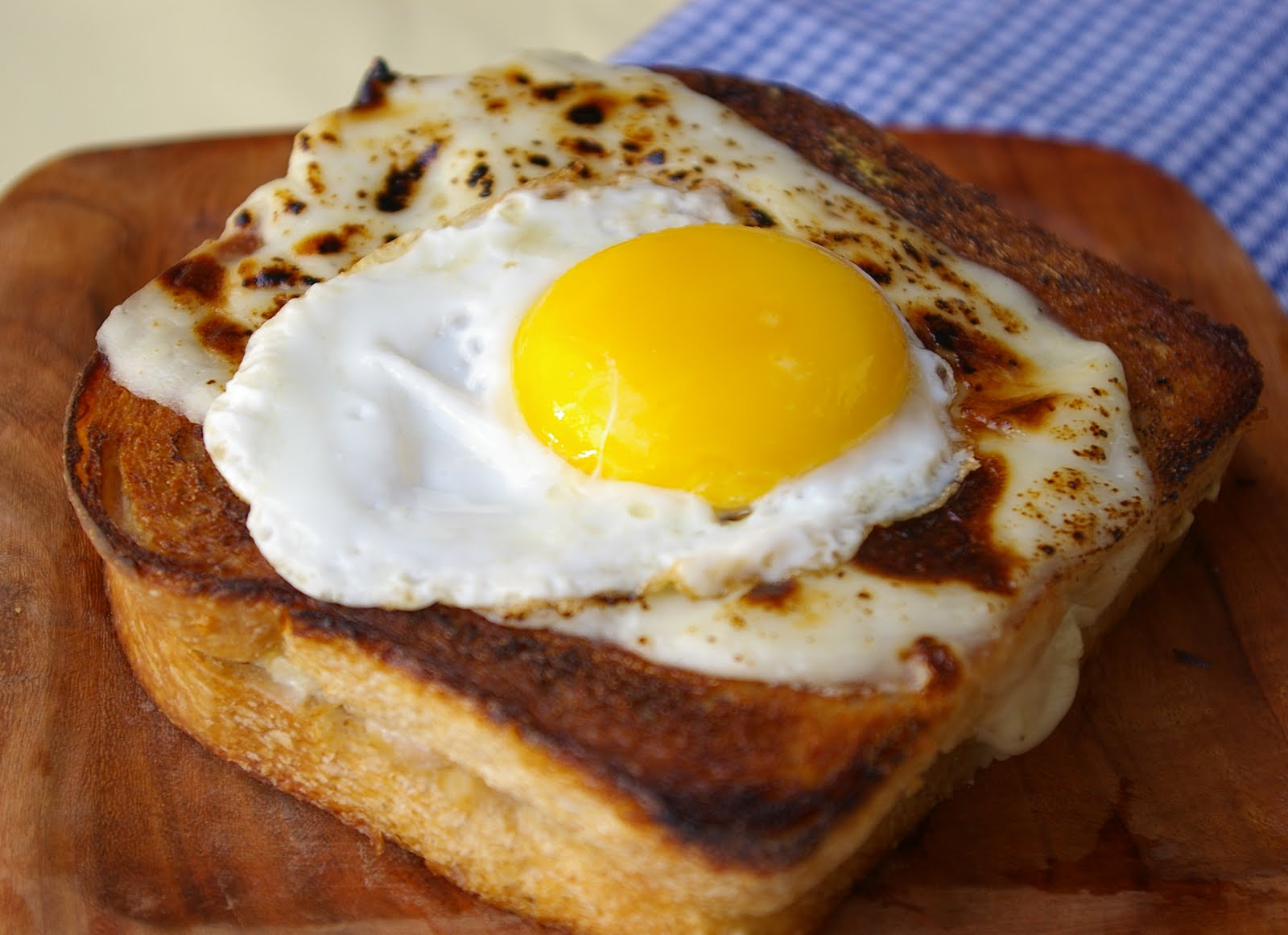
Save some sliced meat for the famous French croque-madame; it’s a croque-monsieur, made with Gruyere cheese and highly seasoned ham, with an egg on top. In this version, turkey replaces ham; butter-smeared toast and a rich mornay sauce still make the dish plenty rich. And serve it with knives and forks; this isn’t finger food.

Once the cheese sauce is prepared, keep it warm (it thickens as it cools and loses its velvety consistency). Spoon the sauce over the golden sandwiches and slide them under the broiler. Don’t go away; they will brown in seconds. The defining element is a sunny-side up egg, placed delicately on top so the yolk stays intact. The egg takes the sandwich from a simple monsieur to a decadent madame.

Roast turkey breast with root vegetables
Serves 4 with leftovers

2 medium turnips, cut into large wedges
2 small parsnips, cut into large wedges
2 shallots, halved
5 small red potatoes, cut into large wedges
Olive oil (for sprinkling)
Salt and pepper, to taste
3 pound boneless turkey breast
1/2 cup white wine or water
3 sprigs fresh thyme, leaves chopped

1. Set the oven at 350 degrees. In a large roasting pan, combine the turnips, parsnips, shallots, and potatoes. Sprinkle with olive oil, salt, and pepper.

2. Roast the root vegetables for 30 minutes.

3. Remove the pan from the oven, and stir the vegetables. Set the turkey breast in the center. Sprinkle with olive oil, salt, pepper, and thyme. Pour the wine or water onto the root vegetables.

4. Return the pan to the oven. Continue roasting for 45 minutes or until a meat thermometer inserted into the center of the turkey registers 160 degrees. (Total roasting time is 1 hour and 15 minutes.)

5. Remove the pan from the oven and let it rest in a warm place for 5 minutes. The meat temperature will rise to 165 degrees.

6. Transfer the turkey to a cutting board. Remove any strings or mesh bag from the meat. Cut the meat into slices. (Set aside 4 slices for the sandwiches.) Serve the turkey with root vegetables and any juices in the pan.

Turkey croque-madames
Serves 4

SAUCE

2 tablespoons butter
2 tablespoons flour
2/3 cup milk
1 ounce Gruyere, grated ( 1/2 cup)
Pinch grated nutmeg
Salt and pepper, to taste

1. In a skillet, bring several inches of hot water to a boil. In a small saucepan over medium-low heat, melt butter. Whisk in flour. Cook, stirring often, for 3 minutes.

2. Slowly whisk in milk. Bring the mixture to a boil. Lower the heat to medium-low and stir in the Gruyere. Season with salt, pepper, and nutmeg. Set the saucepan in the skillet to keep warm.

SANDWICH

3 tablespoons butter, at room temperature
8 slices sandwich bread
4 slices leftover turkey breast
2 ounces Gruyere, grated (1 cup)
Salt and pepper, to taste
4 eggs

1. Turn on the broiler. Have on hand 2 large skillets with ovenproof handles.

2. Lay out 4 slices of bread. Divide the turkey and Gruyere evenly among them. Season lightly with salt and pepper. Cover each with a slice of bread. Lightly butter top sides of the sandwiches. (Use 1 tablespoon now and 1 tablespoon later on the other side.)

3. Over medium heat, heat the skillets. Place 2 sandwiches, buttered sides down, in each skillet. Cook for 4 minutes or until golden on the bottom, pressing the tops lightly with a metal spatula. Butter the tops. Flip the sandwiches to cook the other side, pressing lightly, or until the undersides are golden.

4. Remove the sauce from the water; wipe the bottom. Spoon sauce over each sandwich, dividing it evenly. Place the skillets under the broiler and cook for 1 to 2 minutes or until the sauce is browned in spots and bubbling. Set aside in a warm place.

5. In a large nonstick skillet over medium heat, melt the remaining 1 tablespoon of butter. Crack the eggs, one at a time, into a bowl, then tip them into the skillet. Cook 3 minutes, or until the whites are set but the yolks are still runny. If you prefer a firmer yolk, cook for 1 minute more. Sprinkle with salt and pepper.

6. Using a wide metal spatula, slide 1 egg on top of each sandwich.

Wednesday, April 7, 2010

Beef Stew to Baked Ziti


Braised beef raises profile of stew and baked ziti
By Karoline Boehm Goodnick, Globe Correspondent | April 7, 2010

All kinds of complex braised beef dishes have crept into the vast American recipe box. Sometimes the occasion calls for simplicity. This retro stew starts with beef chuck, a large, inexpensive cut with plenty of marbling, which softens by long, slow cooking. Brown pieces of the beef, stir in celery, onions, and tomato paste, and simmer gently. Instead of adding potatoes to the pot, roast red potatoes separately so you have a crisp texture to accompany the dish. Set aside some of the stew and finish the rest with a sprinkling of green peas.

The unadorned stew lends itself to the beginnings of a hearty Italian meat sauce. Canned tomatoes are the foundation of this ragu. Add body with tomato paste (you’ll have some left over from the stew). While the sauce bubbles, cook a pot of ziti. Layer the sauce and pasta with creamy ricotta and a mozzarella/Parmesan combo, which bakes into a golden crunchy crust. The transformation turns an American standard into a casserole any nonna would be proud to serve.

Beef stew with roast potatoes
Serves 4 with leftovers

POTATOES

4 red potatoes, each cut into 8 wedges
1 teaspoon dried rosemary
1 tablespoon olive oil
Salt and pepper, to taste

1. Set the oven at 350 degrees. Have on hand a rimmed baking sheet.

2. In a large bowl, toss the potatoes, rosemary, olive oil, salt, and pepper. Tip the potatoes out onto the sheet.

3. Roast them for 45 minutes or until the potatoes are tender.

BEEF

4 pounds beef chuck, cut into 1-inch pieces
1/4 cup flour
Salt and pepper, to taste
2 tablespoon vegetable oil
6 stalks celery, chopped
1 onion, chopped
3 tablespoons tomato paste
1 3/4 cups water
1 cup frozen peas

1. In a large bowl, toss the beef, flour, salt, and pepper.

2. In a large flameproof casserole, heat 1 tablespoon of the oil over high heat. Working in small batches, brown several pieces of the beef for 3 minutes on a side. Transfer to a plate. Brown the remaining beef the same way. Remove all the meat from the pan.

3. Add the remaining 1 tablespoon olive oil. When it is hot, add the celery and onion. Cook, stirring often, for 5 minutes, or until the vegetables soften.

4. Stir in the tomato paste. Add water and return the beef to the pan. Bring the mixture to a boil. Lower the heat to medium and cover the pan. Cook, stirring occasionally, for 1 hour and 15 minutes or until the meat is tender when pierced with a fork. (Set aside 2 cups of the meat and sauce for baked ziti).

5. Stir the peas in the remaining mixture in the pan. Cook, stirring occasionally, for 5 minutes. Taste for seasoning. Serve with the potatoes.

Baked ziti
April 7, 2010

Serves 4

Vegetable oil (for the dish)
1 tablespoon vegetable oil
1 onion, chopped
3 cloves garlic, finely chopped
1/2 cup tomato paste
1 can (14.5 ounces) diced tomatoes
3/4 cup water
1 teaspoon dried oregano
2 cups leftover beef stew, meat cut into shreds
Salt and pepper, to taste
1 pound dried ziti
1 pound fresh ricotta
4 ounces shredded mozzarella
1/2 cup grated Parmesan

1. Set the oven at 375 degrees. Lightly oil a 9-by-13-inch baking dish.

2. In a medium saucepan, heat the oil over high heat. Add onion and garlic. Cook, stirring often, for 5 minutes or until the onion softens. Stir in the tomato paste.

3. Add the tomatoes, water, oregano, and beef stew. Bring to a boil, lower the heat to medium, and cook, stirring occasionally, for 10 minutes. Remove from the heat. Taste for seasoning and add salt and pepper.

4. Bring a large pot of salted water to a boil. Add the ziti and cook, stirring often, for 10 minutes or until pasta is tender but still has some bite. Drain the pasta into a colander.

5. Pour about 1/3 of the tomato sauce into the baking dish. Add 1/2 the pasta, dot with 1/2 the ricotta and 1/3 of the mozzarella.

6. Add 1/3 of the sauce, the remaining pasta, the remaining ricotta and 1/3 of the mozzarella.

7. Add the remaining sauce, the remaining mozzarella, and the Parmesan.

8. Bake for 30 minutes or until the cheese is brown and the mixture is bubbling at the edges. Let the dish settle for 5 minutes before serving.

Wednesday, March 17, 2010

Adobo Pork & Congee


Stretch the spice with two Asian classics
From the Boston Globe

Filipino food gets lost among the choices of Southeast Asian cuisines. An approachable introduction to the islands’ food is the stew called adobo, which can be made with a variety of meats. A long cooking period lets the piquant nature of vinegar, soy sauce, and peppers meld flawlessly with the tender braised meat. It’s as easy as cooking gets: All the ingredients go into one pot, and essentially all you have to do is skim the surface often to remove excess fat.

Adobo pork makes a satisfying supper. Use small pieces of pork butt. Add a jalapeno and peppercorns (the dish should be a little spicy), but remove the peppercorns before serving. The dish simmers for more than an hour, until the pork is quite tender; then you have to let the cooking liquid bubble over high heat until it reduces and intensifies. Pair the dish with long-grain white rice. For Monday’s dinner, save some of the pork and rice for congee.

Congee, or rice porridge, is traditionally served as breakfast in China. Think of it as Asian risotto, which can serve as a main dish for supper. The simple flavors of the soup provide a blank canvas on which the punchy adobo shines. Once you have leftover adobo and rice, the dish is quick to make. Saute ginger, scallions, and garlic in a pan, pour in chicken stock, water, and the leftovers from Sunday. Simmer briefly, garnish with a few more scallions and a drop of dark sesame oil. Two classics blend together to create a recipe that you will revisit again and again.

Adobo pork
Serves 4 with leftovers

RICE

3 cups long-grain white rice
4 1/2 cups water

1. In a fine mesh sieve, rinse rice well under cold running water.

2. In a large pot with a tight-fitting lid, combine the rice and water. Bring to a boil over high heat. Lower the heat to medium, cover, and cook for 10 minutes.

3. Remove the rice from the heat and let it sit, covered, for 5 minutes. (Set aside 4 cups cooked rice for the congee.)

PORK

4 pounds boneless pork butt, cut into 1-inch pieces
1 1/2 cups cider vinegar
1/2 cup soy sauce
1 teaspoon whole black peppercorns
1 bay leaf
3 cloves garlic
1 jalapeno or other chili pepper, halved
Salt, to taste
2 scallions, thinly sliced

1. In a large flameproof casserole, combine pork, vinegar, soy sauce, peppercorns, bay leaf, garlic, and jalapeno. Stir well.

2. Bring to a boil, lower the heat to medium-low, and cover the pot.

3. Simmer for 45 minutes, occasionally skimming fat from the surface.

4. Remove the lid and continue cooking over medium heat for 30 minutes more or until the pork is extremely tender. (Total cooking time is 1 hour and 15 minutes.)

5. With a slotted spoon, transfer the pork to a bowl; set aside. Skim the fat from the cooking juices. Bring liquid to a boil and let it bubble steadily until it reduces by half.

6. Place the pork in the pan. Continue cooking for 5 minutes. Taste for seasoning and add salt, if you like.

7. Remove and discard the bay leaf, jalapeno, and peppercorns. (Set aside 1 1/2 cups pork and cooking juices for the congee.)

8. Spoon the remaining pork mixture over the rice. Garnish with scallions.

Congee (rice porridge)
Serves 4

1 teaspoon vegetable oil
1 piece (1 inch) fresh ginger, finely chopped
2 cloves garlic, finely chopped
5 scallions, thinly sliced
1 1/2 cups adobo pork and cooking juices
1 quart chicken stock
2 cups water
4 cups cooked rice
1/4 cup soy sauce
Salt and pepper, to taste
Sesame oil (for sprinkling)

1. In a large flameproof casserole, heat the oil over high heat. Add ginger, garlic, and half the scallions. Cook, stirring often, for 3 minutes.

2. Add the pork mixture, chicken stock, water, cooked rice, and soy sauce. Bring the liquid to a boil, lower the heat to medium, and simmer for 10 minutes. Taste for seasoning and add salt and pepper, if you like.

3. Ladle into bowls. Garnish each serving with a few drops of sesame oil and the remaining scallions.

Thursday, March 11, 2010

Fighting Childhood Obesity - Chili Mac & Quesadillas


The Boston Globe ran a story yesterday dedicated to the efforts being made to fight childhood obesity and better nourish our children. (Click on the previous link to read the full story and get tips on how to improve your family's health.) I contributed to the article by styling Sheryl's Sweet Potato Quesadillas (a tasty gem of a simple recipe) and creating/ styling the Chili Mac recipe. Both dishes contain lean proteins and an addition of more veggies than are found in traditional versions.

Sweet potato and turkey quesadillas with cheddar
March 10, 2010
Serves 4

2 large sweet potatoes
8 large flour tortillas
2 cups shredded cheddar
4 slices cooked turkey breast, cut into strips
Salt and pepper, to taste

1. Set the oven at 425 degrees. Pierce the sweet potatoes 6 or 8 times with a fork. Set them in a roasting pan and bake for 50 to 60 minutes or until they are tender when pierced with a skewer. Remove the potatoes from the oven; leave the oven on.
2. Let the potatoes sit until they are cool enough to handle. Halve them lengthwise and scoop the flesh into a bowl. Mash it with a fork.
3. On 2 large baking sheets, arrange 4 of the tortillas so they are not touching. Heat them in the oven for 3 minutes or until they are warm but still pliable; leave the oven on.
4. Line the tortillas up on the counter. Spread them with a thin layer of mashed potatoes, add a sprinkle of cheese, some turkey, salt, and pepper. Cover each round with another tortilla to make a sandwich. Return the tortillas to the hot oven.
5. Bake the quesadillas for 5 to 8 minutes more or until the top round is crisp and the cheese is melting at the edges. Transfer to a cutting board and cut the rounds into quarters.
6. Set 4 quarters on each of 4 plates.
Sheryl Julian

Chili mac
March 10, 2010
Serves 4

Old-fashioned versions of this classic rely on ground beef, ready-made tomato sauce, and regular pasta, and typically do not contain other vegetables. This updated recipe uses ground turkey instead of beef. Choose a mixture of white and dark meat, or use only ground breast meat for the leanest option. Bell pepper, celery, and zucchini provide a healthy dose of veggies; young diners may not even notice them in the dish. Use whole-wheat macaroni, but let the kids choose the shape. Elbows, shells, and even bow ties will work with this presentation. Top each bowl with a few pieces of avocado, giving the dish a fresh look and healthy fats.

1 teaspoon olive oil
1 pound ground turkey (mixture of white and dark meat)
1 small onion, chopped
1 red bell pepper, chopped
2 stalks celery, chopped
1 clove garlic, chopped
Salt and black pepper, to taste
2 tablespoons chili powder
1 teaspoon dried oregano
1/2 teaspoon ground cumin
1 cup water
1 can (28 ounces) diced tomatoes
1 can (15 ounces) kidney beans, with their liquid
2 small zucchini, chopped
1/2 pound whole-wheat macaroni or other small pasta
1 avocado, peeled and chopped

1. In a large flameproof casserole, heat the olive oil over medium-high heat. Brown the turkey, breaking it up with a spoon, for 5 minutes or until it begins to brown.
2. Add the onion, bell pepper, celery, garlic, salt, and black pepper. Cook, stirring often, for 5 minutes or until the vegetables begin to soften.
3. Add the chili powder, oregano, and cumin. Stir for 1 minute.
4. Add the water and tomatoes. Bring to a boil, lower the heat, and simmer for 10 minutes.
5. Stir in the kidney beans and zucchini. Return liquid to a boil. Lower the heat, and simmer for 30 minutes. Taste for seasoning and add salt and black pepper, if you like.
6. Bring a large pot of salted water to a boil. Add the macaroni or other pasta. Cook, stirring occasionally, for 7 minutes or until pasta is tender but still has some bite. Drain the pasta into a colander; shake it but do not rinse.
7. Divide the noodles among 4 deep bowls. Top with chili and garnish with avocado.

Thursday, January 7, 2010

Sloppy Joes


Nothing says comfort food like Sloppy Joes. Why not make it healthier by substituting lean ground buffalo for the beef and serving it on homemade sourdough rolls? Grass-fed buffalo is higher in Omega-3s (an essential fatty acid) than grain-fed cattle, balancing your Omega-6s. Unbalanced levels of Omega-6s may lead to heart disease, inflammatory diseases, obesity, diabetes, cancer, and behavioral disorders. Sourdough rolls make a better alternative to white hamburger buns since the acid in the starter lowers the glycemic index rating. Some day, when I am feeling particularly ambitious, I will post a sourdough recipe.

For this dish, use a jalapeno if you like things spicy. To mellow your joe, choose a poblano or a green bell pepper instead. We like to grind our own spices, but you may use a pinch each of ground clove, allspice and black pepper. We served them with Molly Wizenberg's pickled carrots (pictured above). The combination was pure ecstasy.

Serves 2-4, depending on how sloppy you like your joe

1 teaspoon olive oil
1 medium onion, chopped
3 cloves garlic, minced
1 jalapeno, finely chopped
1/2 pound ground buffalo
1 clove
5 allspice berries
1 teaspoon black peppercorns
1 tablespoon ground dried chili
1 tablespoon honey
1 teaspoon mustard (we made our own - recipe to come)
1 tablespoon apple cider vinegar
3 roma tomatoes, cored and pureed in a blender
Salt and black pepper, to taste
2-4 sourdough or hamburger buns, split horizontally

1. Grind clove, allspice berries, and black peppercorns. Reserve.
2. In a heavy-bottomed skillet, heat olive oil over medium-high heat. Stir in onion, garlic, and jalapeno. Cook, stirring often, for 2-3 minutes or until vegetables begin to soften.
3. Add meat, breaking it up with a spoon. Cook, stirring often, for 5-7 minutes or until meat is browned.
4. Add ground clove, allspice, pepper, and dried ground chili. Stir.
5. Add honey, mustard, vinegar, and tomato puree. Stir well. Bring liquids to a boil. Reduce the heat to a simmer, and cook for 15 minutes, stirring often.
6. Taste for seasoning. Add more salt and pepper, if you like.
7. Distribute filling amongst buns.

Sloppy Joe Potatoes on Foodista

Wednesday, December 23, 2009

From Pork Roast Comes Delicious Banh Mi


From the Boston Globe -- December 23, 2009

Roasting, wrote the great American cook James Beard, is one of the most spectacular forms of cooking. As luck would have it, an ordinary home oven does a pretty wonderful job of roasting. Perhaps that’s why a roast was the traditional centerpiece of the midday Sunday dinner for so long. It’s still a good choice for the celebration table. Pork loin, a popular cut sold on and off the bone (boneless is easier to handle when it’s time to carve) has a reputation for being dry and a little bland after roasting. No doubt the classic accompaniments of applesauce and gravy were intended to mask that. We rub the meat with soy sauce and salt and let it sit for half an hour (or half a day). That gives color to the finished pork and lends a good flavor to the next day’s Asian recipes. During roasting, brush the meat with a honey and jalapeno glaze.

The next day, turn the pork into a tasty Vietnamese banh mi. These sandwiches, made on French baguettes, began as street food and have developed a cult-like following. Begin with an Asian dipping sauce; mix a few tablespoons of the sauce into mayonnaise and use this dressing with cucumbers, carrot matchsticks, and lots of chilies to layer with thinly sliced pork in crusty loaves. Then sprinkle with chopped peanuts and garnish with fresh cilantro. From Main Street to Saigon all in one roast.

Glazed Pork Roast

Serves 4 with leftovers

1 boneless pork loin (about 4 pounds)
1/4 cup soy sauce
Salt and black pepper, to taste
3/4 cup honey
1 jalapeno or other small chili pepper, cored, seeded, and finely chopped
1/4 cup spicy mustard
1 clove garlic, finely chopped

1. Rub the meat with soy sauce and sprinkle with salt. Set in a dish large enough to hold it. Cover and refrigerate for 30 minutes or up to several hours.
2. Set the oven at 350 degrees. Have on hand a roasting pan and rack.
3. Line the pan with foil. Place the rack in the lined pan. Set the meat, fat side up, on the rack. Sprinkle with black pepper.
4. In a saucepan, combine the honey, jalapeno, or chili pepper, mustard, and garlic. Bring to a boil and simmer for 3 minutes. Brush the meat with the honey mixture. Roast the meat for 1 hour, brushing with the honey mixture every 15 minutes, or until a meat thermometer inserted into the center of the meat reaches 140 degrees.
5. Turn the oven temperature up to 450 degrees. Glaze the meat again, and roast for 5 minutes. The glaze should be crispy and dark brown.
6. Set the meat in a warm place; the internal temperature will rise to 145 degrees. Cut into thick slices.

Banh Mi (Vietnamese Sandwiches)


From the Boston Globe -- December 23, 2009

Serves 4

ASIAN DIPPING SAUCE

2 tablespoons soy sauce
1 1/2 teaspoons Asian fish sauce
2 tablespoons seasoned rice vinegar
1/2 teaspoon hot sauce (such as Sriracha), or to taste
1 piece ( 1/2-inch) fresh ginger, finely chopped
1 clove garlic, finely chopped
1 scallion, thinly sliced
1/2 teaspoon sugar

1. In a bowl, combine the soy sauce, fish sauce, rice vinegar, hot sauce, ginger, garlic, scallion, and sugar.
2. Stir well.

SANDWICHES

1/2 cup mayonnaise
3 tablespoons Asian dipping sauce (see above)
1 carrot, cut into matchsticks
1/2 cucumber, thinly sliced
1 jalapeno or other hot chili pepper, cored, seeded, and thinly sliced
4 scallions, thinly sliced
3 cups sliced roast pork
2 baguettes, split horizontally
1/2 bunch cilantro, leaves pulled off
1/4 cup peanuts, chopped

1. In a bowl, mix the mayonnaise and dipping sauce. Add the carrot, cucumber, jalapeno or other chili pepper, and scallions. Toss well.
2. Layer vegetables and dressing with the pork on the baguettes. Add cilantro and peanuts to each. Halve each baguette to make 4 sandwiches.

Thursday, December 10, 2009

Waste Not, Want Not Curry


Even though we have yet to determine the final guidelines for 2010, we are moving forward with the project. In an effort to rid our pantry of "processed foods" -- however you may define them -- we wanted to use up ingredients that we knew would not fit into the plan. For this recipe, we used commercially produced coconut milk, pre-blended curry powder, chili paste, and fish sauce. While we wouldn't categorize these items as inherently unhealthy, we will attempt to make or substitute our own homemade versions in the new year. The result was far tastier than take-out and almost as easy.

The pork in this dish was left from a Sunday roast. Feel free to use other leftovers or a raw cut like pork steak. To make this recipe vegan, simply omit the meat and the fish sauce. We used Szechuan chili paste (to ban jan), but you may use Sriracha, Sambal Olek, or even fresh chilis. This recipe is best served with rice; we like brown basmati rice for its low glycemic index value. You may garnish with scallions, chilis, lemon juice, cilantro, or peanuts.

1 teaspoon canola oil
5 ounces pork, finely chopped
1 white onion, finely chopped
5 cloves garlic, minced
1 piece (1-inch) ginger, minced
1 piece (1/2-inch) fresh tumeric, minced or 1 teaspoon ground tumeric
Zest of 1 lemon, finely chopped
2 cups broccoli florets
1 cup mushrooms, chopped
1 teaspoon curry powder
1 teaspoon chili paste
1 tablespoon fish sauce
1/4 cup rice wine or dry sherry
1-12 ounce package firm tofu, cut into 1-inch cubes
1 can (13.5 ounces) coconut milk
Salt and pepper, to taste

1. In a large wok or saute pan, heat the oil over high heat.
2. Add the pork, and saute for 5 minutes or until crispy.
3. Add onion, garlic, ginger, tumeric, and lemon zest. Saute for 3 minutes, or until the vegetables release their aromas.
4. Stir in broccoli, mushrooms, curry powder, and chili paste. Toss to coat.
5. Add fish sauce, rice wine, tofu, and coconut milk.
6. Bring liquids to a boil. Reduce to a simmer, and cook for 5 minutes or until broccoli is tender.
7. Taste for seasoning, and add salt and pepper.
8. Serve warm with rice. Garnish with any of the following: lemon juice, peanuts, cilantro, scallions, and chilis.

Wednesday, November 25, 2009

Turkey Salad with Mayfair Dressing


I had forgotten about this recipe until a link showed up on this year's Thanksgiving issue of the Boston Globe online. The recipe for the dressing came from my mother-in-law. It's a great way to use up leftovers!

Turkey salad with Mayfair dressing
By Karoline Boehm Goodnick, Globe Correspondent | November 24, 2008

Serves 4

Turkey sandwiches with cranberry chutney are delectable later that evening or for lunch the next day, and a pot of soup is a fine way to recycle the carcass. Here's another use for the rest of the meat. Make a light curried mayonnaise-style dressing - a similar one was originally served at the Roberts Mayfair Hotel, a historic property in St. Louis. Add the dressing to your cooked bird with red grapes and shelled pistachios, or stir in leftover green beans, chunks of roasted squash, or Brussels sprouts. Hold the pie. That's for later.


1/2 stalk celery, chopped
1/2 medium onion, chopped
1 large clove garlic
1/2 tin (2 ounces) anchovies, drained
Juice of 1/2 lemon
1/2 teaspoon curry powder
Salt and pepper, to taste
2 tablespoons yellow mustard
1/2 teaspoon sugar
1 egg plus 1 extra yolk
1/2 cup olive oil
1/2 cup vegetable oil
1/2 bunch parsley
8 cups (2 pounds) chopped cooked turkey
1 1/2 cups red seedless grapes, cut in half
1 cup shelled pistachios

1. In a blender, combine the celery, onion, garlic, anchovies, and lemon juice. Blend into a puree.

2. Add the curry powder, salt, pepper, mustard, and sugar; blend well.

3. Remove the cap in the blender lid and with the motor running on medium speed add the egg and extra yolk, then slowly drizzle in the olive and vegetable oils.

4. Add the parsley and blend until it is coarsely chopped. Chill the dressing for 30 minutes.

5. In a large bowl, combine the turkey, grapes, and pistachios. Add enough dressing to moisten the mixture well. Taste for seasoning and add more salt and pepper, if you like.

I styled the photo above, and it was shot by Wendy Maeda.